Goals:
Aim for a net positive impact on biodiversity
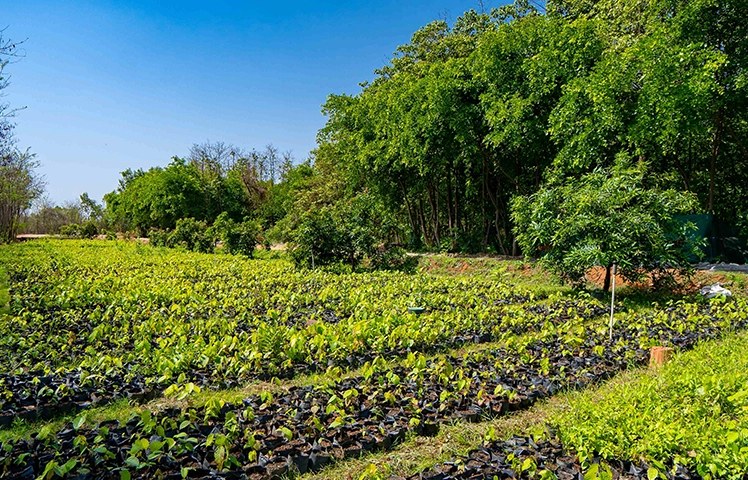
Nursery at PEKB, Adani Natural Resources
Biodiversity forms the foundation of natural systems that support economic activity, human well-being and long-term business continuity. Services such as water regulation, climate moderation, soil health and habitat stability are increasingly under strain as ecosystems face mounting pressure from land use change, pollution, resource extraction and climate impacts. For AEL spanning multiple businesses, these pressures translate into material risks as well as opportunities. Nature and biodiversity stewardship is central to how we plan, build and operate responsibly. We recognise that safeguarding ecosystems is integral to enterprise resilience and sustainable value creation. To this end, AEL is strengthening its governance systems, undertaking structured biodiversity assessments across key locations and embedding the TNFD framework to progress toward our commitment of no net loss and a transition to a nature-positive future.
Governance
Our comprehensive Biodiversity policy integrates biodiversity considerations into business planning. The policy guides our conservation initiatives, driving compliance with national regulations and international standards.
The Corporate Responsibility Committee, a Board-level committee, provides strategic oversight of the Biodiversity Policy and commitments therein. The internal ESG committee, chaired by the Chief Sustainability Officer (CSO) drives cross-business implementation of biodiversity policy and aligns business operations with AEL's ESG goals. Site-level ESG SPOCs ensure day-to-day adherence.
The company also builds internal capacity through employee workshops that enhance awareness of biodiversity and nature. These sessions enable employees to integrate biodiversity considerations into daily operations and support the company's sustainability goals.
more about our ESG Governance in the Our Approach to ESG Section click here
Implementing the LEAP Strategy
AEL has adopted the TNFD-aligned LEAP (Locate, Evaluate, Assess and Prepare) methodology to systematically understand how its diversified operations interact with nature across locations and value chains. The LEAP approach enables structured identification of ecosystem dependencies and biodiversity impacts, assessment of material nature related risks and opportunities across multiple time horizons, and integration of these insights into enterprise risk management, capital planning and biodiversity management plans.
AEL maps its operational sites against sensitive ecosystems and priority geographies to identify where it interfaces most significantly with nature.
Assesses its dependencies on ecosystem services and its impacts on biodiversity using science-based tools to understand how nature supports and is affected by our operations.
Analyses material physical and transition risks and opportunities arising from nature-related dependencies and impacts across short, medium and long term horizons.
Embed findings into our risk management, strategies & planning, BMPs, and TNFD-compliant disclosures.
Biodiversity Management Process
AEL's Technical Standard on Biodiversity Management operationalises the Biodiversity Policy through three sequential stages – Risk Screening, Ecosystem Services Assessment and Biodiversity Management Plan (BMP), consistently applied across all business units. The standard guides integration of biodiversity and ecosystem service considerations into core decision-making and embed relevant biodiversity requirements into their environmental management systems.
Biodiversity Risk Assessment and Management Approach
Biodiversity Risk Screening
Identify biodiversity risks at and around AEL sites using:
- Global databases (IBAT, ENCORE, etc.)
- Location-specific data
- Inputs from the subject matter experts
Biodiversity & Ecosystem Services Assessments
Conduct field studies, community surveys, trend analysis to:
- Map ecosystem services around operations
- Assess dependencies and impacts for current and proposed operations
- Identify key drivers of ecological change
Biodiversity Management Plan
Develop tailored strategies and actions to mitigate biodiversity risks and impacts for each site using the mitigation hierarchy:
BMPs have been developed for various project sites outlining recommendations for biodiversity enhancement.
Biodiversity Impact Assessments are carried out as a part of the Environmental Impact Assessment (EIA) study for all applicable greenfield and brownfield projects. Baseline studies are conducted to identify the endangered species, necessary conservation plans are created as per the applicable regulatory requirements.
Matching Commitments with On-Ground Action
The Adani Group has pledged to grow 100 million trees by 2030 on 1t.org, the World Economic Forum's Trillion Trees Platform. Contributing to the commitment, AEL has pledged to grow 15.39 million trees.
Sustainable Mine Reclamation
AEL is implementing overburden management, topsoil conservation, afforestation and No Net Loss (NNL) plans across its mining portfolio in line with the Biodiversity Policy and industry best practices.
PEKB Mine, Chhattisgarh: A Restoration Story
9 MW solar power plant
commissioned on 30 acres of reclaimed land
4 lakh tonnes of CO2e
to be avoided over 25 years
Over 1.56 million trees planted
as part of restoration and rehabilitation
548 hectares restored
out of ~1,898 hectares mined
Innovative “Liquid Tree” in Jaipur
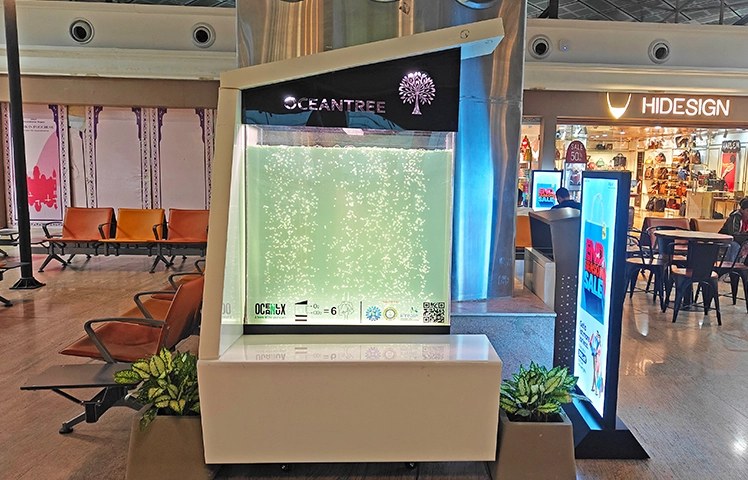
Jaipur International Airport has installed five units of “Liquid Trees”, a bio-inspired air purification system, at Terminals 1 and 2. Each unit features a 250-litre glass tank with seating arrangements.
The system uses microalgae-based artificial photosynthesis to capture carbon dioxide and pollutants while releasing oxygen. Collectively, these units will absorb approximately 267 kg of CO2 and generate 197 kg of oxygen annually, significantly improving air quality in high-footfall areas. This initiative underscores Jaipur Airport's commitment to sustainability and innovative ESG practices.