Goals:
- Achieve 30% reduction in energy consumption intensity across operations by 2030, w.r.t. FY 2021-22
- Achieve 50% Renewable Energy share in our total electricity mix by 2030
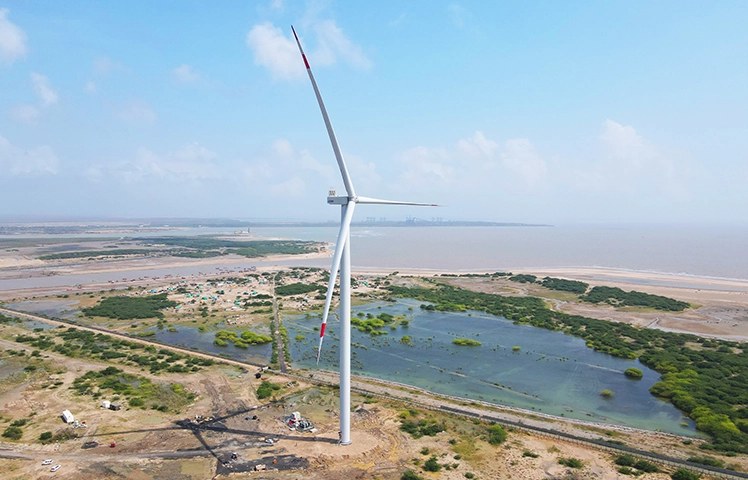
Wind Turbine, Adani Wind Mundra
At AEL, energy management is central to our operational strategy, delivering dual value by advancing our decarbonisation agenda while enhancing cost efficiency. Our efforts focus on maximising energy savings through optimised consumption patterns, continuous efficiency improvements, and targeted investments in innovation, research and development (R&D) to reduce energy intensity across businesses.
Our approach is guided by a robust Energy Management Policy and ISO 50001 aligned energy management systems, which provide a structured framework for continuous improvement. We periodically conduct comprehensive energy audits across facilities, led by internal teams and external experts, to analyse consumption trends, assess the effectiveness of energy saving initiatives, and identify opportunities for technology upgrades and process innovation. Insights from these audits inform policy updates, target-setting, and data-driven decisions, while driving improvement of our energy management systems.
To strengthen outcomes, AEL is deploying advanced automation, digital solutions, and energy efficient technologies developed or evaluated through focussed innovation and R&D initiatives. These enable real-time monitoring, predictive analytics, and timely correction of inefficiencies. Wherever feasible, we pursue green building certifications to embed efficiency at the design stage, complemented by employee training and awareness programmes that reinforce energy-efficient practices across the organisation.
Fuel Management System (FMS) in Mining Services
Fuel is a major cost and energy driver in mining operations, yet traditional monitoring methods often lack transparency and real-time control. To address this, AEL's Mining Services business implemented a digital Fuel Management System (FMS) to enable precise tracking, monitoring and optimisation of fuel consumption across OB and coal fleets.
The system provides real-time, equipment-wise visibility of fuel usage, eliminating manual reporting gaps and enabling shift-wise and asset-level performance analysis.
Automated alerts flag abnormal consumption, thereby supporting timely corrective action, preventive maintenance and improved fleet efficiency.
The initiative has reduced fuel losses and excess consumption, improved asset productivity, and lowered operating costs. Optimised diesel usage has also led to reduced CO2 emissions, reinforcing AEL's energy efficiency and decarbonisation objectives. Scalable and data-driven, the FMS serves as a replicable model for resource optimisation across asset-intensive operations.
Transitioning to Renewable Energy
Over the next decade, most of our businesses are committed to increasing their reliance on renewable energy to fulfil their energy needs. The key measures to achieve this include:
- Installing captive renewable energy generation facilities, wherever feasible
- Leverage group open-access agreements and PPAs with renewable energy producers to source clean energy, supplemented by Renewable Energy Certificates from verified providers where RE sourcing is not feasible
- Exploring advanced energy storage systems to ensure round-the-clock renewable energy
Scaling Renewable Energy
The Adani portfolio is developing the world's largest 30 GW hybrid renewable energy park at Khavda, Kutch, Gujarat. Spread across 538 km2, it is five times the size of Paris and as large as the city of Mumbai. AEL businesses will procure renewable energy from this project through the group open access arrangement, by investing in the required infrastructure and consuming green electricity generated.
Integrating Renewable Energy Across AEL Operations
As part of its transition to a low carbon and energy-efficient operating model, AEL is scaling the use of renewable energy across its operations to reduce carbon footprint while strengthening energy security and resilience. In FY 2025-26, AEL achieved an increase of 58.8 million kWh in renewable energy sourced, leading to emission savings of nearly 42,000 tCO2e.
During the year, Adani Solar expanded its renewable portfolio by integrating 5.2 MW of wind energy, in addition to 1.6 MW of rooftop solar and existing wind capacity, enabling an estimated annual generation of ~80 million kWh and reducing approximately 57,000 tCO2 annually. Notably, a 9 MW solar power plant was commissioned at the PEKB coal mine in Chhattisgarh during the reporting year, which now contributes to approximately 35% of the mine's electricity requirements through renewable sources, supporting a gradual transition towards cleaner energy.
Over its lifecycle, the project is expected to abate nearly 4,00,000 tonnes of CO2.
These initiatives demonstrate how renewable energy can be seamlessly integrated into energy-intensive operations, delivering measurable emissions reduction, operational efficiency, and sustainable value creation, while setting replicable benchmarks for decarbonisation across traditional industries.
reduction achieved in energy intensity across the organisation6
of renewable electricity integrated in the energy mix in FY 2025-26, constituting 19% of the total electricity mix.
The Mumbai Airport operates on 100% green electricity, demonstrating excellence in sustainable airport management.
6 Base year used is FY 2021-22 with energy intensity 309 GJ per ₹ crore of revenue

Rapid business expansion and the accelerated growth of our incubating businesses like copper have led to an increase in our energy consumption.
Total Energy Consumption (in GJ)
| Particulars | FY26 |
|---|---|
| Total non-renewable energy consumption | 92,41,259 |
| Total renewable energy consumption | 8,09,671 |
Business-Wise Targets and Progress
| Business | Target | Progress in FY 2025-26 |
|---|---|---|
| Mining Services | 15% reduction in energy intensity by FY 2027-28 | 11% reduction in energy intensity on a turnover basis |
| Solar Manufacturing | 5% energy optimisation, per MW of module production | Achieved a y-o-y energy intensity reduction of 6% |
| Airport | Transition to 100% green electricity | 59% of electricity sourced from renewable sources |
| Data Center | Source 100% electricity needs from renewable energy sources for operational sites by 2030 | 59% of electricity sourced from renewable sources |
Upstream and Downstream Energy Consumption
During the reporting year, 6,04,243 GJ of energy was consumed as part of downstream leased assets in airport and data center businesses.
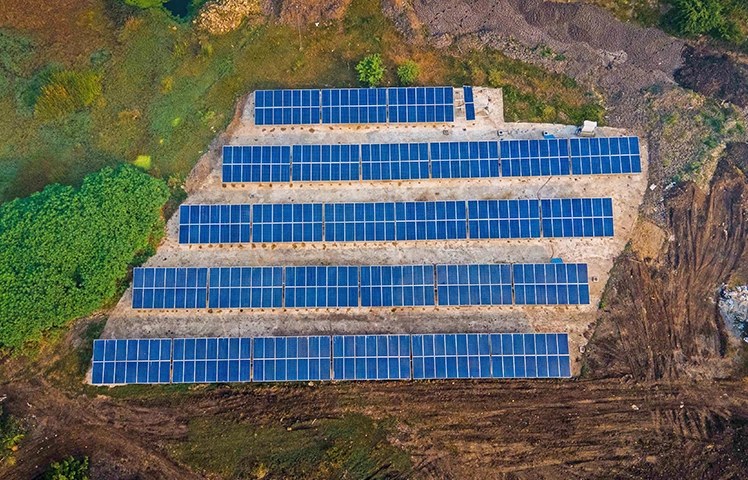
Captive Solar at Adani Water Ltd., Prayagraj