As one of the world’s fastest growing major economies, India is at a critical juncture, seeking to sustain rapid economic growth amid rising climate risks that threaten long-term development. India is consistently ranked among the top 10 countries most affected by climate change. The country faces increasing exposure to extreme weather events, including heatwaves and erratic monsoons, with climate impacts projected to significantly affect national income and livelihoods if left unaddressed. In response, India has set out an ambitious climate agenda under its Nationally Determined Contribution to the Paris Agreement, including a net zero target by 2070, accelerated renewable energy deployment, reduced emissions intensity, enhanced carbon sinks.
Aligned with these national priorities, AEL has adopted a comprehensive climate strategy embedded into its long-term business planning, focussing on mitigating climate related risks, strengthening operational resilience, and advancing on its road to Net Zero. The company continues to invest in decarbonisation initiatives, technology upgrades, energy efficiency improvements, renewable energy integration, and climate-resilient infrastructure, with investments periodically reviewed to ensure alignment with evolving regulations and sectoral transition pathways.
AEL's climate-related risk management and disclosures are grounded in the 4 pillars of the IFRS S2 [previously TCFD] Framework - Governance, Strategy, Risk Management, and Metrics & Targets; ensuring a comprehensive, integrated, and resilient approach to managing climate risks.
Policy Advocacy
AEL's senior leadership continually engages in policy advocacy on ESG and climate-related aspects through collaboration with government bodies and recognised industry associations and global platforms, including the Confederation of Indian Industry (CII), United Nations Global Compact (UNGC), Green Hydrogen Organisation (GH2), World Economic Forum (WEF), among others.
Click here, to read more about our Policy Advocacy efforts
Climate-linked Management Incentives
AEL links leadership incentives to ESG and climate priorities to strengthen accountability. Annual bonuses incorporate KPIs on emissions, energy efficiency and renewable energy use, while long-term rewards reflect progress on strategic climate goals. The Chief Sustainability Officer and ESG teams also have performance-linked components tied to operational ESG and climate-related outcomes, embedding sustainability into enterprise-wide performance management.
Governance
AEL has instituted a robust climate governance framework to navigate the intricate challenges of climate risk while seizing the potential opportunities it presents.
Board Level - Dedicated ESG Committee comprised of 100% Independent Directors
Management Level - ESG Committee including CSO and Business-wise ESG leads
The Board-level CRC along with the RMC oversees the climate strategy and governance processes, controls and procedures for managing climate-related risks and opportunities, including associated mitigation and adaptation actions.
Drives execution of the climate strategy to manage climate related risks and opportunities and deliver sustained progress on the Company's decarbonisation journey.
Click here, to read more about our ESG and Climate Governance
Strategy and Risk Management
We prioritise a structured approach to evaluate and mitigate the risks posed by climate change. Recognising that climate-related risks, including both physical and transition risks can significantly impact our business continuity and financial performance, we have adopted a proactive approach to identify, evaluate, and mitigate these risks, while capitalising on opportunities to transition to a low carbon economy.
Climate Risk Assessment
We conduct comprehensive climate risk assessments catered to each business and integrate climate considerations into our overall strategic planning, ensuring sustainable growth and stability in a changing climate environment.
Climate-related risks and opportunities are integrated into the Company's enterprise-wide risk management (ERM) framework through a documented process that identifies, assesses, and prioritises climate risks alongside other strategic and operational risks. In line with the TCFD recommendations and IFRS S2 Climate-related Disclosures, AEL evaluates both physical and transition risks across the short, medium, and long term.
Climate risk assessments are conducted based on credible climate scenarios and across various time horizons. Scenario analysis, sensitivity assessments, and stress-testing methodologies are used to evaluate the potential magnitude and likelihood of climate-related impacts across the short-, medium and long term on operations, assets, value chain dependencies, and financial performance. Risks are prioritised based on their likelihood, severity of impact, and time horizon.
Climate Risks
For climate-related physical and transition risks, comprehensive qualitative and quantitative climate-related scenario analysis was conducted, considering the following:
| Category | Scenarios Covered | Climate Risks Assessed | Time Horizons |
|---|---|---|---|
|
Physical Risk
|
|
|
|
|
Transition Risk
|
|
|
AEL is also committed to embedding the principles of a just transition in the development and implementation of its climate transition and adaptation plans. This includes assessing how climate actions may affect workers, communities, local ecosystems, and resource availability across the value chain. The approach aims to minimise adverse socio-economic and environmental outcomes by using stakeholder dialogue, monitoring mechanisms, and transparent reporting to ensure that the low-carbon transition is inclusive and equitable.
Impacts of Climate-Related Physical Risks
We conduct detailed site-specific assessments to evaluate the key impacts and financial implications from all categories of climate risks. Details of the material risks identified are included in this chapter.
Heat Stress: Chronic
Heat Waves: Acute
Businesses Impacted
Mining services, Airports, Solar module & Wind turbine generator manufacturing, Data centers, Copper
Overview
Rising temperatures driven by climate change pose significant risks to infrastructure, worker safety, and business efficiency, with heatwaves undermining short-term productivity and long-term asset integrity.
Key Impacts
- Extreme heat reduces equipment efficiency, accelerates infrastructure degradation, increases maintenance needs
- Higher temperatures drive greater cooling demand, leading to increased energy consumption and operating costs
- Prolonged heat exposure lowers worker productivity and well-being, raises the risk of heat-related illnesses, and requires additional safety measures
Excess Rainfall and Floods: Acute
Businesses Impacted
Data center, Airports, Mining services
Overview
Heavy rainfall and flooding create operational challenges, health risks, and logistical disruptions, exposing infrastructure and logistical weaknesses making flood resilience a key priority.
Key Impacts
- Persistent rainfall can disrupt power, and communication services, slowing production and business operations
- Flooded and blocked roads hinder access to sites, delaying the movement of raw materials and finished goods and disrupting supply chains
- Water stagnation and contamination increase health risks for workers and nearby communities, potentially leading to illness and productivity losses
3 While we have analysed the possibility and impact of wildfire for our business locations, we have not identified any significant risk against it in any of the climate scenarios.
Cyclones: Acute
Businesses Impacted
Solar module and Wind turbine generator manufacturing, Copper
Overview
Cyclonic storms cause severe winds, heavy rainfall, and infrastructure damage, resulting in business disruptions, operational downtime, safety risks, and significant financial losses.
Key Impacts
- Cyclones can severely damage transport, utility, and power infrastructure, causing prolonged disruptions and productivity losses due to electricity and communication outages
- Extreme weather conditions may require temporary shutdowns and evacuations, making employee safety measures and emergency preparedness critical
- Damage to transportation routes disrupts supply chains, delaying deliveries and increasing shipping and logistics costs due to rerouting and recovery efforts
Water Stress: Chronic
Drought: Acute
Businesses Impacted
Solar module and Wind turbine generator manufacturing, Copper, Mining services, Data center, Airports
Overview
Drought conditions and water scarcity create operational, social, and health risks, driving regulatory pressures, constraining water-dependent activities, and raising long-term sustainability concerns.
Key Impacts
- Reduced water availability can disrupt production processes and lower efficiency. It also poses business continuity risks due to potential regulatory restrictions
- Non-availability of water increases health and safety risks, including compromised sanitation, dehydration, and heat-related illnesses for workers
- Competition for scarce water resources may lead to community conflicts and reputational risks for businesses operating in water-stressed regions
Sea-level Rise: Chronic
Businesses Impacted
Solar module and Wind turbine generator manufacturing, Copper
Overview
Sea-level rise poses growing risks to coastal operations by increasing flooding, erosion, and asset damage. It also threatens long-term business continuity through higher maintenance costs, supply-chain disruptions, and reduced asset viability in coastal areas.
Key Impacts
- Sea-level rise increases the risk of flooding, erosion, and permanent inundation of coastal assets, disrupting operations and damaging infrastructure
- Higher exposure to storm surges and saltwater intrusion can raise maintenance costs, impair utilities, and reduce asset lifespans
- Disruptions to ports, transport networks, and coastal supply chains may affect logistics, business continuity, and insurance availability
Physical Climate Risk Adaptation
AEL has developed a structured and comprehensive adaptation strategy to address the business and site-wise impacts of climate-related physical risks. The strategy draws on our climate change risk assessments and scenario analysis, which identify asset-specific exposure to acute and chronic hazards such as extreme heat, extreme rainfall, flooding, cyclones, drought, water stress and sea-level rise. In line with IFRS S2/TCFD recommendations, the adaptation plan aims to minimise potential physical damage, safeguard operational continuity, and leverage opportunities where feasible.
Oversight of physical climate risk adaptation sits within AEL's established ESG governance framework, with monitoring by the Board and Executive Management. Climate risks and their adaptation measures are reviewed periodically to ensure continued alignment with latest climate scenarios, regulatory developments and stakeholder expectations.

Indoor plantation at Mumbai Airport
Adaptation Strategy
AEL strengthens climate resilience across its operations through targeted infrastructure upgrades, operational preparedness and resource efficiency measures that address site-specific physical climate risks. Operational continuity is supported by updated emergency response and business continuity plans, periodic stress testing of critical systems and appropriate insurance coverage. To manage hazards such as cyclones, flooding, extreme rainfall and sea level rise, the company deploys engineering interventions including structural reinforcement in cyclone prone areas, elevation of critical equipment in flood-exposed zones, and upgraded drainage systems, sump pumps and backflow preventers across airports and manufacturing sites. Heat-related risks are mitigated through advanced cooling technologies, reflective materials and green infrastructure. Given rising water stress, AEL takes measures to optimise consumption, expands water recycling and sources water from non-competitive sources. The company implements rotational shifts, modified work hours, hydration measures, and cooling interventions such as smart thermostats and shaded areas, to enhance workforce safety under extreme climate conditions.
Implementation Across Existing and New Assets
AEL undertakes efforts to reduce and manage material climate risks across both existing and planned assets, to ensure long-term sustainability and business resilience. Existing operations follow a phased adaptation roadmap, with high‑risk assets prioritised for implementation within a five-year horizon based on severity of exposure. New operations integrate climate‑resilience features at the design stage to ensure long‑term operability.
Recognising that physical climate risks are inherently location and context-specific, AEL integrates climate considerations directly into site-level business planning and asset design. Adaptation responses are tailored to the nature of each site, considering local hazard profiles, engineering feasibility, institutional capacity and operational priority. The contextualisation approach enables the selection of the most effective combination of physical (engineering) and non-physical (policy, process and behavioural) measures. Based on severity of exposure, high-risk assets are prioritised for implementation of adaptation plans within a five-year horizon.
Management of Climate-Related Transition Risks
Current & Emerging Regulation
Key Businesses Impacted
Mining services, Airports, Solar module & Wind turbine generator manufacturing, Data centers, Copper
Overview
AEL operates across sectors - mining services, airports, renewables manufacturing, data centers, and infrastructure exposed to evolving climate-related regulations. Shifts such as tighter carbon pricing, renewable purchase obligations, and sector-specific emissions norms pose material transition risks. Regulatory acceleration under Net Zero pathways may affect fossil-linked value chains, capital project permissions and supply chain compliance.
Implications
Stricter policies may increase operating costs for businesses with conventional logistics. Renewable manufacturing and green hydrogen ecosystems may face policy-driven variability in incentives. Data centers may see mandatory renewable sourcing and efficiency thresholds. Cost of capital could rise for assets with high emissions intensity, impacting margins.
Response Measures
AEL is advancing towards a 45% operational emission intensity reduction by 2030, and aligning with India's NDC trajectory. Businesses are expanding renewable PPAs, and investing in low-carbon industrial processes. Scenario-based assessments inform capital allocation, ensuring long-term resilience under increasing regulatory requirements.
Technology Risk
Key Businesses Impacted
Mining services, Airports, Solar module & Wind turbine generator manufacturing, Data centers
Overview
Rapid advancements in green energy equipment such as solar modules and wind turbines generators, and other carbon management technologies may render existing assets and processes obsolete. For AEL's diversified portfolio, technology adoption influences competitiveness and long-term value.
Implications
Lagging adoption may lead to higher operating costs, stranded manufacturing capacity, reduced energy efficiency, and weakened market share against technologically advanced competitors. Capital-intensive assets risk value erosion if technology shifts accelerate sharply.
Response Measures
AEL prioritises implementation of innovative technologies, such as green hydrogen fuel cell trucks deployed in mining, and continuous technology upgrades across manufacturing setups. Business units evaluate emerging low carbon technologies for scale-up feasibility, strengthening resilience through innovation-driven competitiveness.
Legal Risk
Key Businesses Impacted
All AEL business units
Overview
Climate-related litigation, tightening disclosure expectations, and global due-diligence requirements are increasing across sectors. For AEL's infrastructure-heavy and energy-linked businesses, legal exposure may arise from emissions non-compliance, greenwashing allegations, value-chain environmental impacts, or failure to meet contractual sustainability requirements.
Implications
Litigation or regulatory breaches can lead to penalties, project delays, higher insurance premiums, restrictions on financing, and loss of licenses for sectors such as airports, mining services, and defence. Disclosure-related risks may increase borrowing costs if sustainability reporting does not meet investor expectations.
Response Measures
AEL is committed to strengthening its climate governance and disclosures in line with recognised global and national frameworks. Businesses are embedding compliance checkpoints in operations, contracting, procurement, and environmental management systems.
Market Risk
Key Businesses Impacted
Solar modules and Wind turbine generator manufacturing, Data centers, Copper
Overview
Global and national energy transitions are reshaping demand patterns. As economies shift from fossil-based to clean energy systems, sectors linked to coal logistics, conventional fuels, and high emissions transport face structural pressures. For AEL, these dynamics affect mining services, logistics-linked operations, and conventional infrastructure assets.
Implications
Customers accelerating decarbonisation may prefer low carbon products and services. Conversely, renewable equipment, green hydrogen and green data centers see growing demand but require capacity expansion and technological readiness.
Response Measures
AEL is scaling its new energy ecosystem, expanding solar and wind manufacturing, venturing into transition metals such as copper and transitioning operations to low carbon energy sources. Market assessments inform diversification strategies. Green business models and renewable powered infrastructure enable AEL to align with shifting customer and investor expectations, ensuring relevance in a decarbonising economy.
Reputational Risk
Key Businesses Impacted
Airports, Mining services, Solar modules and Wind turbine generator manufacturing
Overview
Stakeholders including investors, customers, regulators, and communities - expect robust climate action, transparent disclosures, and credible decarbonisation commitments. As scrutiny increases across sectors, perceived gaps in climate performance or ESG governance could harm corporate reputation.
Implications
Reputational damage may reduce investor confidence, impact access to capital, influence customer purchasing decisions, and create vulnerabilities in strategic partnerships. High emission intensity operations risk heightened public scrutiny, especially under accelerated transition pathways.
Response Measures
AEL maintains strong disclosure standards aligned with global frameworks and rating expectations, supported by transparent and credible sustainability reporting and disclosures. Businesses are embedding sector specific transition plans with ambitious climate targets, increasing renewable energy uptake, and engaging proactively with stakeholders to reinforce trust.
Financial Aspects of Climate Change
Climate change presents material financial considerations for the organisation, influencing capital allocation, asset performance and long-term solvency. AEL maintains strong financial flexibility through proactive capital planning, disciplined liquidity management and targeted investments in low-carbon initiatives to respond to evolving regulatory and market conditions.
Continuous monitoring enables timely identification of climate-related vulnerabilities, ensuring that capital expenditure is directed towards efficiency upgrades, resilience enhancements and renewable energy integration. Scenario-based assessments of climate-related financial risks are embedded into solvency planning, supporting long-term stability.
By aligning sustainability priorities with financial risk management, the organisation reinforces investor confidence and ensures the resilience of its transition to a low-carbon operating model.
Internal Carbon Pricing
AEL's Internal Carbon Pricing embeds climate considerations into decision-making by valuing emissions and guiding low-carbon investments. It sets emissions-reduction budgets, assesses carbon-related financial impacts and strengthens readiness for future regulation. The framework aligns with scientific benchmarks, global best practices and evolving carbon taxes, offering a comprehensive approach to carbon management.
GHG Emissions
Scope 1+2
Type of ICP
Shadow Pricing
Coverage
Organisation-wide
Price (₹/tCO₂e)
917
Price-setting approach
External expertise and internal consultation
Opportunities Related to Climate Change
AEL is positioned to capture robust growth opportunities arising from the global low-carbon transition. Market opportunities including rising demand for green energy, sustainable travel and energy-efficient services are leveraged by AEL's expansion into an integrated new energy ecosystem for renewable energy manufacturing aiming to produce 1 MMTPA of green hydrogen along with derivatives. The Company is also developing a 1 MMTPA copper smelter, one of the world's largest single-location facilities, capitalising on copper's critical role as a transition metal in electrification and clean-energy infrastructure.
Technology-driven opportunities stem from supporting R&D for advanced technologies, sustainable fuels, and energy-efficiency measures, enhancing operational efficiency and lowering emissions across business units. Reputation-related opportunities arise from stronger sustainability practices, community engagement and transparent disclosures, which reinforce stakeholder trust and market differentiation.
Financially, AEL is undertaking efforts to utilise incentives and cost efficiencies associated with low‑carbon solutions, supporting long‑term growth and expanding market reach. Collectively, these opportunities enhance competitiveness and position AEL as a key enabler of India’s climate transition.
ANIL'S OFF-GRID GREEN HYDROGEN PILOT A BREAKTHROUGH IN DECARBONISATION
Adani New Industries Limited (ANIL), a wholly-owned AEL subsidiary, has commissioned India's first 5 MW fully off-grid green hydrogen pilot plant, setting a new benchmark in decentralised, renewable-powered hydrogen production. Powered entirely by renewable energy and supported by a Battery Energy Storage System, the plant operates round-the-clock without grid dependence, demonstrating a scalable, cost-efficient model for hard-to-abate sectors such as refining, fertilisers, chemicals and mobility.
The pilot features an automated, closed-loop electrolyser system that dynamically responds to variable renewable inputs, addressing intermittency and enabling stable green hydrogen output. It forms a critical building block of ANIL's integrated new energy ecosystem at Mundra, spanning renewable energy generation, equipment manufacturing and downstream green hydrogen derivatives.
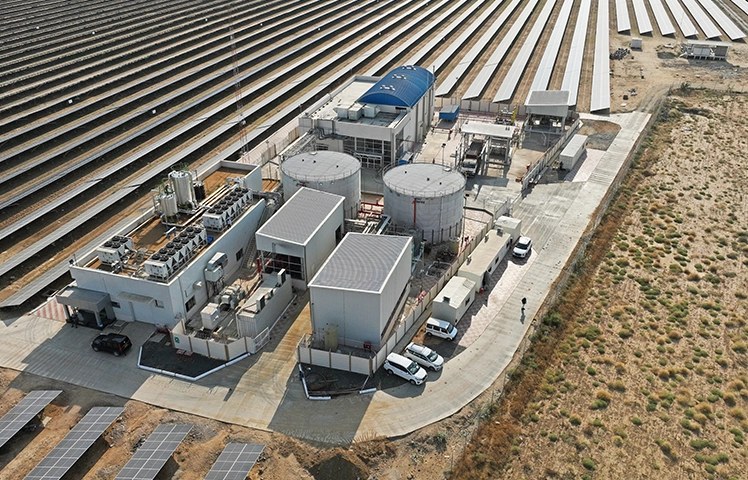
Green Hydrogen Pilot Plant, ANIL
As India's green hydrogen demand rises sharply, this initiative delivers a strong proof of concept for zero-carbon production, supports import substitution for ammonia and urea, and opens pathways for green methanol and hydrogen-based mobility. ANIL's off-grid pilot positions India at the forefront of the emerging global hydrogen economy, combining innovation, scale and market-readiness to accelerate industrial decarbonisation.
Climate Strategy
AEL's climate strategy is aligned with the five nectar elements of India's climate ambition ('Panchamrit') and the Paris Agreement's goal of limiting global warming to well below 2°C above pre-industrial levels, while pursuing efforts towards a 1.5°C target. Grounded in IPCC climate scenarios, the business-use decarbonisation pathways are developed considering science-based approaches, global standards and sectoral best practices.
Decarbonisation
AEL evaluates climate-related physical and transition risks over short, medium, and long-term horizons. A significant part of the company's climate strategy involves decarbonising operations through energy-efficiency measures, fuel switching, and increased uptake of renewable energy.
Decarbonisation of Own Operations
Process and Energy Optimisation
Optimising operations to lower energy and resource usage while enhancing productivity.
Switch to Low Carbon Fuels
Replace traditional fossil fuels with low-to-zero carbon alternatives such as green hydrogen and its derivatives including green ammonia.
Transition to Clean Energy
Electrify operations and mobility where feasible while expanding the use of clean and sustainable energy sources.
Nature-Based Solutions
Invest in nature-based solutions aiming to enhance carbon sequestration through afforestation and reforestation projects.
Setting Up the New Energy Ecosystem
- Set up giga-factories for clean energy equipment with annual production capacities of 10 GW solar PV modules, 5 GW wind turbine generators, and 5 GW electrolysers
- Build an integrated, cost-effective new energy ecosystem targeting 1 MMTPA of green hydrogen production capacity, along with derivatives such as green ammonia
Sustainable Supply Chain Management
- Map the value chain to identify emission hotspots and engage with value chain partners to reduce emissions
- Assessing and strengthening supplier ESG performance to promote responsible and sustainable sourcing
Water Stewardship
With climate risks placing added pressure on freshwater systems, AEL integrates targeted water stewardship actions to enhance ecosystem resilience and protect resources vital for its operations and surrounding communities.
Improvement in water-use efficiency
Wastewater treatment and recycling
Withdrawal from non-competitive sources
Rainwater harvesting and recharge
Metrics and Targets
Our Net Zero Transition Plan
Short Term - 2030
Emission Intensity
45% reduction4 in operational (Scope 1 + Scope 2) GHG emission intensity by 2030
Medium Term - 2030 to 2050
Operational Emissions
Aim to reduce up to 95% operational GHG emissions
Value Chain Emissions
Reduce up to 90% Scope 3 GHG emissions from major categories
Long Term - Beyond 2050
Net Zero
Achieve Net Zero in alignment with India's national commitment
Business-Wise Net Zero Goals
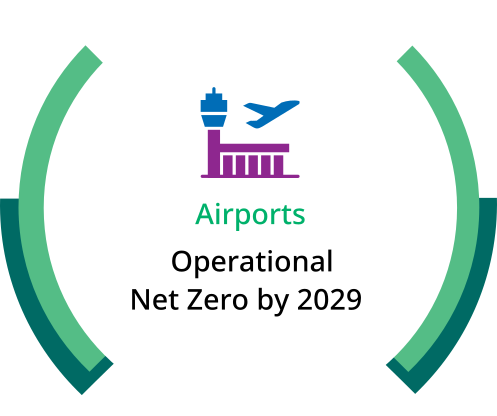
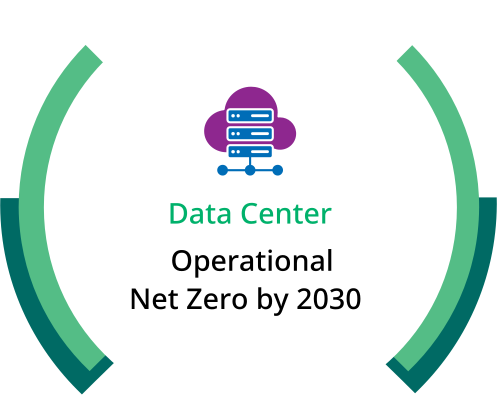
Our New Energy Ecosystem, under ANIL is committed to Net Zero by 2050, as a signatory to WEF's Transitioning Industrial Clusters' initiative.
The other businesses under AEL are slated to reach Net Zero in alignment with India's Net Zero target year.
Progress Against Key Metrics
AEL has achieved a 57% reduction in its Scope 1 & Scope 2 emission intensity4, owing to extensive implementation of energy efficiency measures and widespread adoption of renewable energy.
GHG Emissions Profile
| Emission | Scope 1 | Scope 2 | Scope 3 |
|---|---|---|---|
| tCO2e | 4,22,295 | 7,17,833 | 1,23,87,917 |
GHG Emission Intensity
(tCO2e per ₹ crore of revenue)
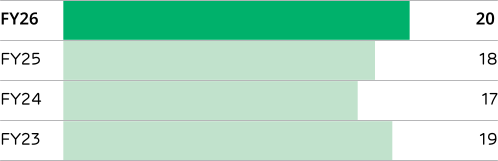
While rapid business expansion and the accelerated growth of our incubating businesses like copper have led to an increase in our emissions, our commitment to climate change mitigation remains resolute. We are actively addressing this through targeted interventions, including a target to source up to 30% renewable energy in our copper business over the next few years.
4 Against base year FY 2021-22 with Scope 1 & 2 emission intensity of 47 tCO2e per ₹ crore of revenue, excluding fugitive emissions.
Scope 3 GHG Emissions
We monitor and report5 Scope 3 emissions across all applicable categories for all business verticals within AEL.
| Scope 3 Categories | Emissions | Scope 3 Categories | Emissions |
|---|---|---|---|
| Cat 1: Purchased goods and services | 35,24,759 | Cat 7: Employee Commuting | 1,282 |
| Cat 2: Capital goods | 2,02,891 | Cat 9: Downstream transportation & distribution | 5,97,810 |
| Cat 3: Fuel-and-energy-related-activities | 3,59,437 | Cat 10: Processing of sold products | 1,99,504 |
| Cat 4: Upstream transportation & distribution | 1,90,866 | Cat 11: Use of sold products | 70,32,136 |
| Cat 5: Waste generated in operations | 951 | Cat 12: End-of-life treatment of sold products | 1,97,776 |
| Cat 6: Business Travel | 2,155 | Cat 13: Downstream leased assets | 78,350 |
Non-GHG Air Emissions
We manage non-GHG air emissions through a structured approach focussed on compliance, monitoring, and continuous improvement. Key pollutants - NOx, SOx, and particulate matter, along with other regulated non-GHG emissions are identified and controlled through operational measures, pollution-control equipment, and preventive maintenance.
Air emissions are regularly monitored using continuous emission monitoring systems and by accredited third-party agencies approved by pollution control boards, with results reported to authorities as required. This ensures ongoing compliance and supports data-driven performance management.
We implement initiatives such as cleaner fuels, advanced filtration and scrubbing systems, process optimisation, and equipment upgrades to reduce emission intensity. Where feasible, we prevent the release of ozone-depleting substances (ODS) by fully adopting ODS-free technologies and materials.
We maintain emissions within regulatory limits and establish time-bound action plans to progressively minimise non-GHG air emissions across our operations.
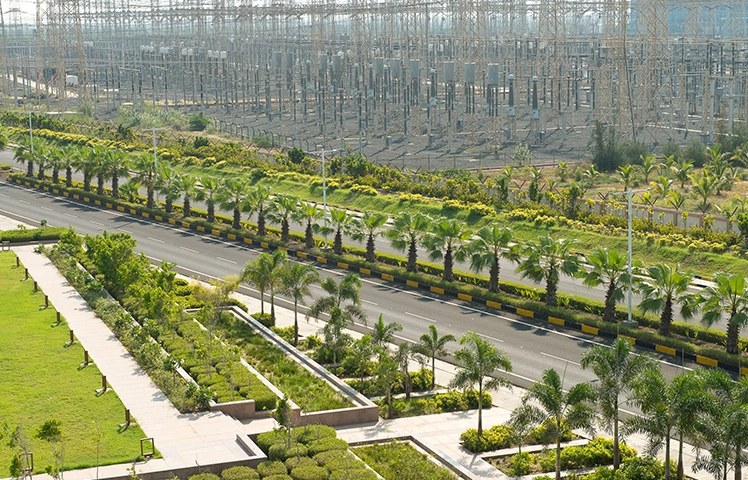
Non-GHG Air emissions
| Emission | NOx | SOx | Particulate Matter (PM) | CFC-11 |
|---|---|---|---|---|
| tonne | 125 | 492 | 24 | 0.0053 |
5 As per the GHG protocol, Scope 3 GHG emission categories 8, 14 and 15 are not applicable for AEL owing to its business nature.