Strengthening
Environmental Stewardship

AEL integrates environmental stewardship into its strategy through structured governance, on-ground action, and integrated environmental risk management.

At AEL, we are steadfast in our ambition to deliver a Net Positive environmental impact and achieve Net Zero in alignment with India’s decarbonisation target.
By leveraging advanced technologies, tailored mitigation strategies, and transformative operational practices, we continue to strengthen climate resilience and elevate our environmental performance year after year. Beyond meeting regulatory expectations, we embed environmental responsibility into our governance framework, business decisions, and organisational culture, driving growth that is innovative, resilient, and aligned with a more sustainable future.
Key Linkages
Material Topics
- M2
Regulatory Compliance
- M3
Climate Change Adaptation and Mitigation
- M4
Energy and Emissions Management
- M7
Circular Economy and Waste Management
- M11
Innovation and Technology
- M12
Biodiversity and Land Use
- M13
Water Stewardship
Strategic Priorities
- S4
Reinforcing Risk Management Framework
- S6
Enhancing Stakeholder Value
- S7
Establishing ESG Leadership
Key Risks and Opportunities
Capitals Impacted

Financial Capital

Manufactured Capital

Natural Capital

Intellectual Capital
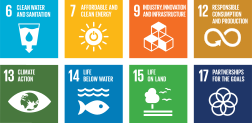
SDGs Aligned
Key Highlights FY 2025-26
57%
Reduction in operational GHG emission intensity1
75%
Reduction in water consumption intensity1
43%
Reduction in energy intensity1
19%
Renewable energy in total electricity mix
91%
Waste diverted from landfill

Climate Action

Energy Management

Water Stewardship

Waste Management & Circularity

Biodiversity Management

Product Stewardship
Robust Environment Management System
Our environmental management system is designed to champion responsible practices while proactively improving our environmental footprint, including logistics operations. It transcends regulatory compliance by focussing on embedding environmental responsibilities into decisive action through best-in-class practices, continuous innovation, and sustained investments in innovative technologies. This approach drives ongoing enhancement while supporting positive outcomes for the environment, ecosystems, communities, and other stakeholders.
Policy Architecture and Management Systems
Our comprehensive environmental management policy defines strategy and clearly outlines roles and responsibilities for its implementation. The Environmental Management System (EMS) translates these policies into practice by embedding governance controls, standard operating procedures, and monitoring mechanisms to manage the environmental impact of operations. The implementation of the policies and EMS is carried out through an internal executive management level ESG Committee comprised of the ESG leads of various business units and chaired by the Chief Sustainability Officer, while the AEL's Board through the Board-level Corporate Responsibility Committee (CRC) ensures the necessary oversight.
Our Environmental and Climate Policies are publicly available on our website.
more about our ESG Governance in the Our Approach to ESG Section click here
100%
AEL business units are certified with ISO 14001:2015
Zero
fines/penalties incurred towards instances of environmental violation or non-compliance
1 Performance is compared to base year FY 2021-22, intensity is calculated per ₹ crore of revenue

Plantation at PEKB Mine, Adani Natural Resources
Performance Monitoring, Reporting and Assurance
We have established robust systems to monitor, measure, and report environmental performance across various key parameters, in alignment with prominent global and national ESG reporting and rating frameworks. Our disclosures are validated through an independent third-party reasonable assurance to ensure credibility and transparency.
Building Internal Capabilities and Awareness
At AEL, we recognise that strong environmental performance is driven by informed decision-making and organisation-wide capability building. We therefore invest consistently in developing environmental competencies across all levels of the organisation, from frontline employees to the Board and its committees. Regular in-person and digital training sessions are conducted to build awareness of key environmental risks and opportunities, operational impacts, and evolving best practices across priority areas including energy, water, waste management, emissions, decarbonisation and climate change.
A mandatory foundational ESG e-learning module is deployed across the workforce to establish a shared understanding of ESG principles, organisational ESG priorities and individual responsibilities. This programme equips employees with practical guidance on responsible management of energy, water and waste, embedding sustainability considerations into day-to-day operations. Complementing this, specialised learning modules focus on energy and emissions management, decarbonisation pathways and climate change.
In addition, AEL conducts targeted, theme-based training and awareness programmes both on-site and at the corporate level delivered through internal subject-matter experts and external specialists. These initiatives include energy-efficiency training to promote reduced energy consumption, waste-reduction training to strengthen circular practices, water-efficiency awareness programmes to support responsible water stewardship, and focussed training on emissions management, decarbonisation and climate change. Together, these structured learning interventions ensure consistent knowledge dissemination, strengthen accountability, and enable employees to actively contribute to improved environmental outcomes and long-term sustainability performance.