Strengthening Workplace
Safety Proposition

At AEL, safety is foundational to performance, resilience and sustainable growth.

At AEL, workforce safety is integral to our operational ethos. Our Occupational Health and Safety (OH&S) framework aligns with global standards and integrates proactive hazard monitoring, risk mitigation and continual enhancement. We invest in workforce competency building and promote consistent communication to enable safer operations. By leveraging digital and AI-enabled initiatives, we are enhancing safety oversight and making our operations safer and more resilient.
Key Linkages
Material Topics
- M2 Regulatory Compliance
- M5 Occupational Health and Safety
- M8 Human Rights
- M11 Innovation and Technology
Strategic Priorities
- S4 Reinforcing Risk Management Framework
- S6 Enhancing Stakeholder Value
- S7 Establishing ESG Leadership
Key Risks and Opportunities
- R8 Social Cohesion Erosion Risk
- R9 Labour Practices
Capitals Impacted
 Human Capital
 Social & Relationship Capital
SDGs
Key Highlights
AEL's Safety Philosophy
Rooted in a Culture of Zero Harm
We believe that when people feel safe, valued and supported, they are empowered to focus, innovate, and deliver excellence. This conviction drives our uncompromising commitment to a culture of zero harm across all operations. We proactively manage risks, invest in continuous capability building and adopt leading standards and technologies to ensure our people work with confidence and purpose.
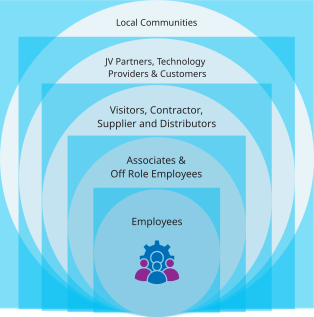
We believe that safety goes beyond systems and processes, it begins with individual commitment. Each employee who imbibes safety as habit, adheres to safety SOPs, looks out for colleagues and inspires others, creates a ripple effect that strengthens collective responsibility. Through the Adani Safetyverse, we expand safety from a sphere of control to a sphere of influence, embedding it as a shared ethos across our ecosystem.
Adani Sphere of Influence
Health and Safety Governance
Our Occupational Health and Safety Policy promotes the “Culture of Care” and guides our activities in a safe manner, ensuring sustainable growth and safety of our people.
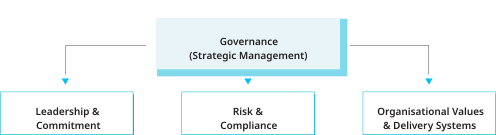
Pillars of Safety Governance
Oversight Framework
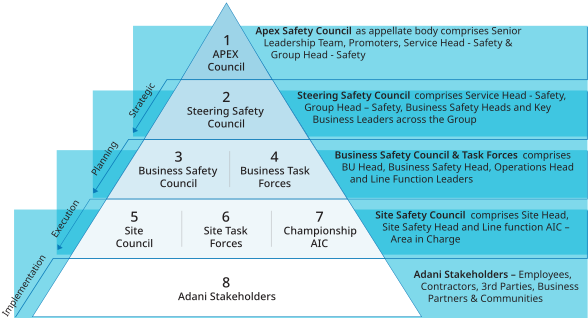
We have implemented a strategic top-down approach for safety management which helps in institutionalising robust safety governance across business segments through well-defined safety accountability and responsibilities.
Safety Governance Structure Hierarchy
Occupational Health and Safety Management System
Our enterprise-wide Safety Management System (SMS) provides a unified Group-level safety framework to manage Occupational Health & Safety (OH&S) across all AEL businesses. It standardises processes, strengthens risk controls and ensures compliance with regulatory and internal requirements. By embedding preventive safety practices and continuous improvement into daily operations, the Safety Management System (SMS) reinforces accountability, operational discipline and our commitment to protecting every individual at work.
We recognise that workplace safety extends beyond the value chain. We have implemented a comprehensive Contractor Safety Management System to embed occupational health and safety (OHS) requirements across all contractual engagements. This ensures that contractors consistently comply with our safety standards, enabling consistent compliance and stronger safety outcomes.
Hazard Identification and Risk Assessment
At AEL, health and safety risks & hazards are managed through a structured organisation-wide framework. Risks are systematically identified, assessed, and mitigated to enable well informed decisions, ensuring consistency across functions and operational contexts.
Systematic Hierarchy of Risk Response
A defined hierarchy of response guides risk mitigation measures, prioritising higher order controls and proactive strategies to ensure safety across all operational levels.
The quality of these processes is enhanced through trainings and capability development of the personnel at all levels and competency assessments of those involved in designing and implementing the safety measures.
– AEL's health & safety risk management framework extends beyond individual departments or isolated operations, recognising the interconnectedness of functions and activities. This integrated approach embeds risk management into core business strategy and decision-making, fortifying our organisational resilience and enabling safer operations across the enterprise.
Driving OH&S Excellence Through Worker Participation
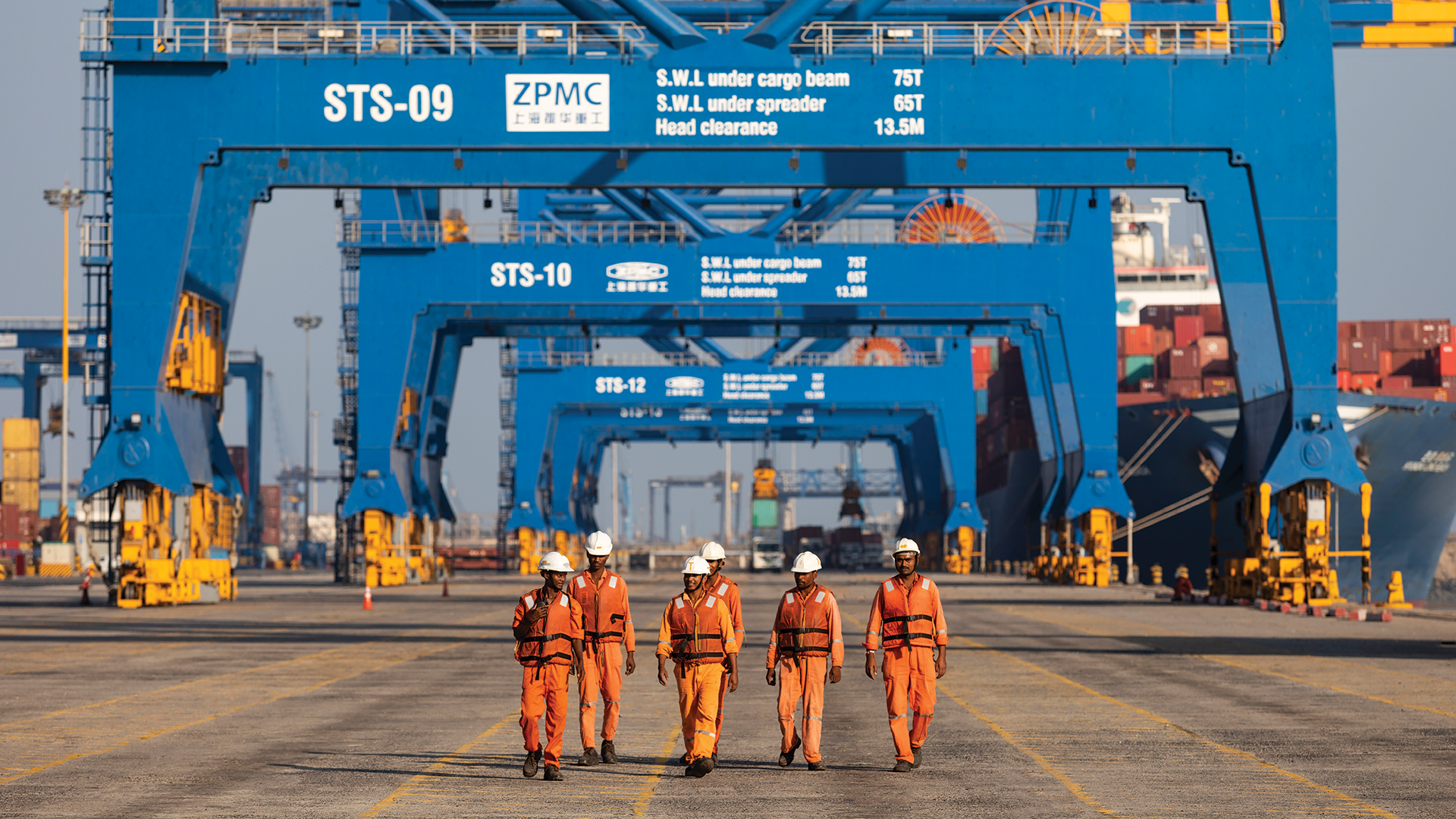
We have instituted structured mechanism to promote active worker participation and consultation in the development, implementation, and continual evaluation of our Occupational Health and Safety (OH&S) management system. Safety committees and safety governance taskforces operate at site, business unit, and group levels, comprising representatives from diverse functions and worker groups to enable inclusive safety-related decision-making.
Engagement is further strengthened through comprehensive training, capability building, and continuous safety communication programmes that enhance awareness of safety policies, procedures, and responsibilities. Employees and workers contribute directly to hazard identification, risk assessments, mitigation planning, and joint hazard reviews through Area Implementation Committees (AICs) and zone-level forums, leveraging their firsthand operational insights to strengthen risk management outcomes.
In addition, workforce safety surveys and structured feedback channels are used to capture perceptions, expectations, and improvement opportunities, enabling continuous refinement of our OH&S management system.
Incident Management Framework

- All employees and workers are empowered to report hazards and incidents through AEL's digital reporting platform (SAFEX), through themselves, their supervisors or anonymously through a QR-based reporting system.
- All reported hazards and incidents are duly recorded for timeliness and consistency.
- Structured investigation is conducted in line with the Group Safety guidelines.
- Critical vulnerabilities, underlying root causes, contributing factors and systemic failures are identified and examined.
- Corrective and preventive actions (CAPAs) are developed and assigned to responsible personnel for effective implementation.
- CAPAs are tracked through SAFEX, our digital safety platform for transparency, accountability and compliance.
- Effectiveness of implemented CAPAs is evaluated upon completion.
- Learnings from incidents are integrated across operations to prevent recurrence and drive continuous improvement.
– Safety Without Reprisal.
The Adani Group Occupational Health & Safety Policy and Life Saving Safety Rules (LSSR) nurture a culture where everyone can report safety concerns without fear of reprisal. Employees and workers are empowered to stop their work if they observe unsafe working conditions. A QR-based reporting system enables anonymous and confidential reporting, protecting workers' identities. Our leadership team actively encourages open dialogue, ensuring everyone is aware of their rights, responsibilities and protection mechanisms.
Emergency Preparedness and Response
Our comprehensive Emergency Preparedness and Response Plan (EP&RP) provides a coordinated response framework to protect our employees, contractors, assets, and the environment during potential emergencies. It defines structured procedures and response protocols to enable swift and effective action during emergencies. It is regularly reviewed, updated and communicated to remain aligned with evolving risks, regulatory requirements and organisational priorities.
Safety Awareness and Engagement
Internal Capability and Competency Building
We enhance risk management effectiveness by strengthening competencies across all levels, from senior leaders and line managers to the frontline workers. Targeted training and capability-building programmes equip employees with the necessary skills to identify and manage safety risks within their roles. Formal competency assessments for personnel involved in designing and implementing safety measures further reinforce accountability and consistency in application of risk management practices across the enterprise.
We covered 49% employees and 78% workers, including contractors through safety management trainings during the reporting period
Saksham ProgrammeContractor Safety Capability Building
Programme Objective
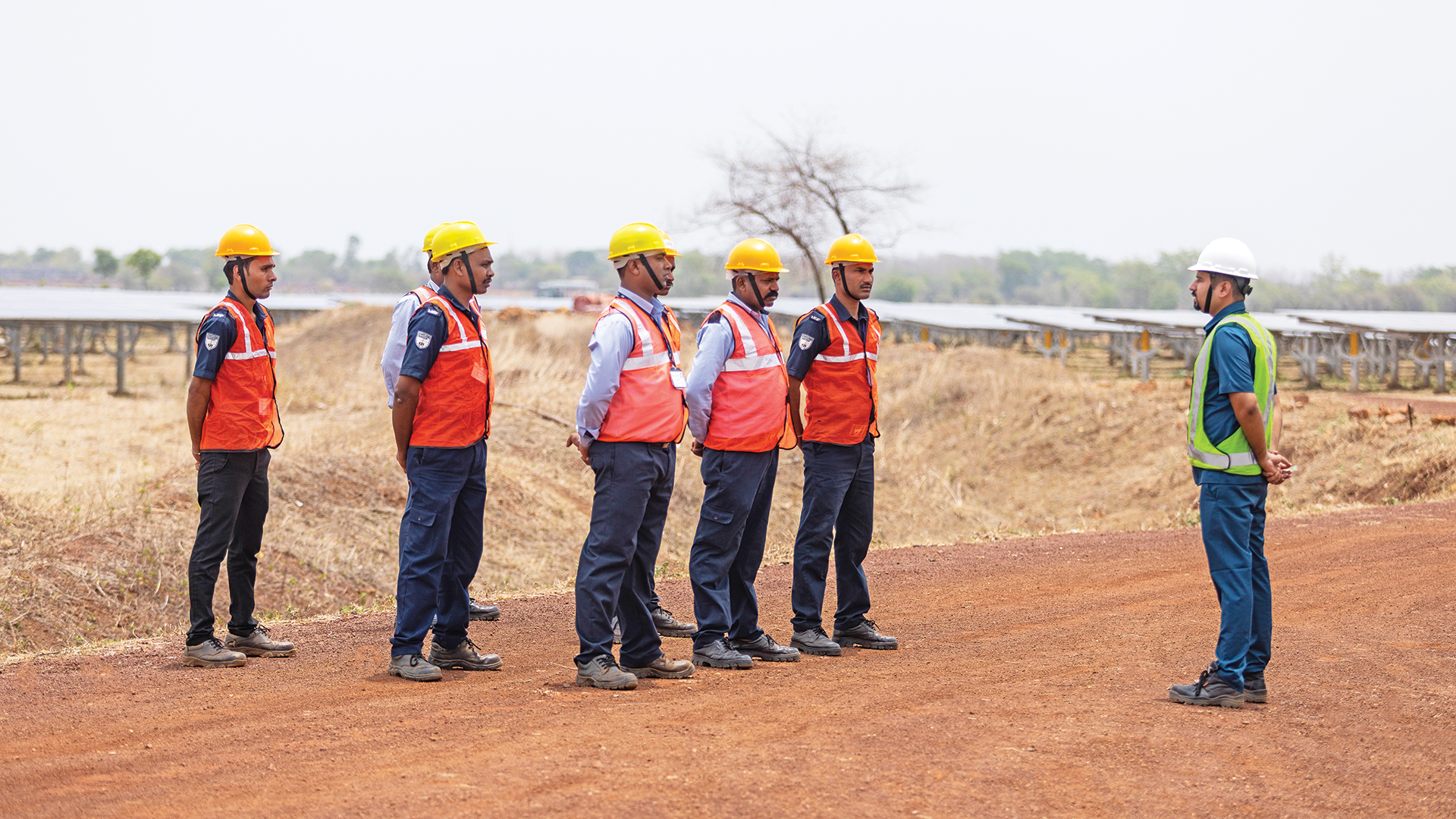
Saksham, our contractor incubation and capability building initiative embeds Adani's safety values, standards, and expectations across the contractor ecosystem. It mandates comprehensive safety induction prior to the commencement of any site activities. It integrates portfolio level safety imperatives with site-specific profiles, enterprise-wide safety requirements and local operational hazards, ensuring contractors are fully prepared to operate safely from day one.
Key Offerings
The programme emphasises continuous learning and improvement through structured feedback mechanisms, enabling refinement of content and delivery based on on-ground experiences and emerging risks.
Achievements
- Last-mile safety ownership
- Enhanced risk awareness
- Proactive incident prevention
Ensuring Safer Communities
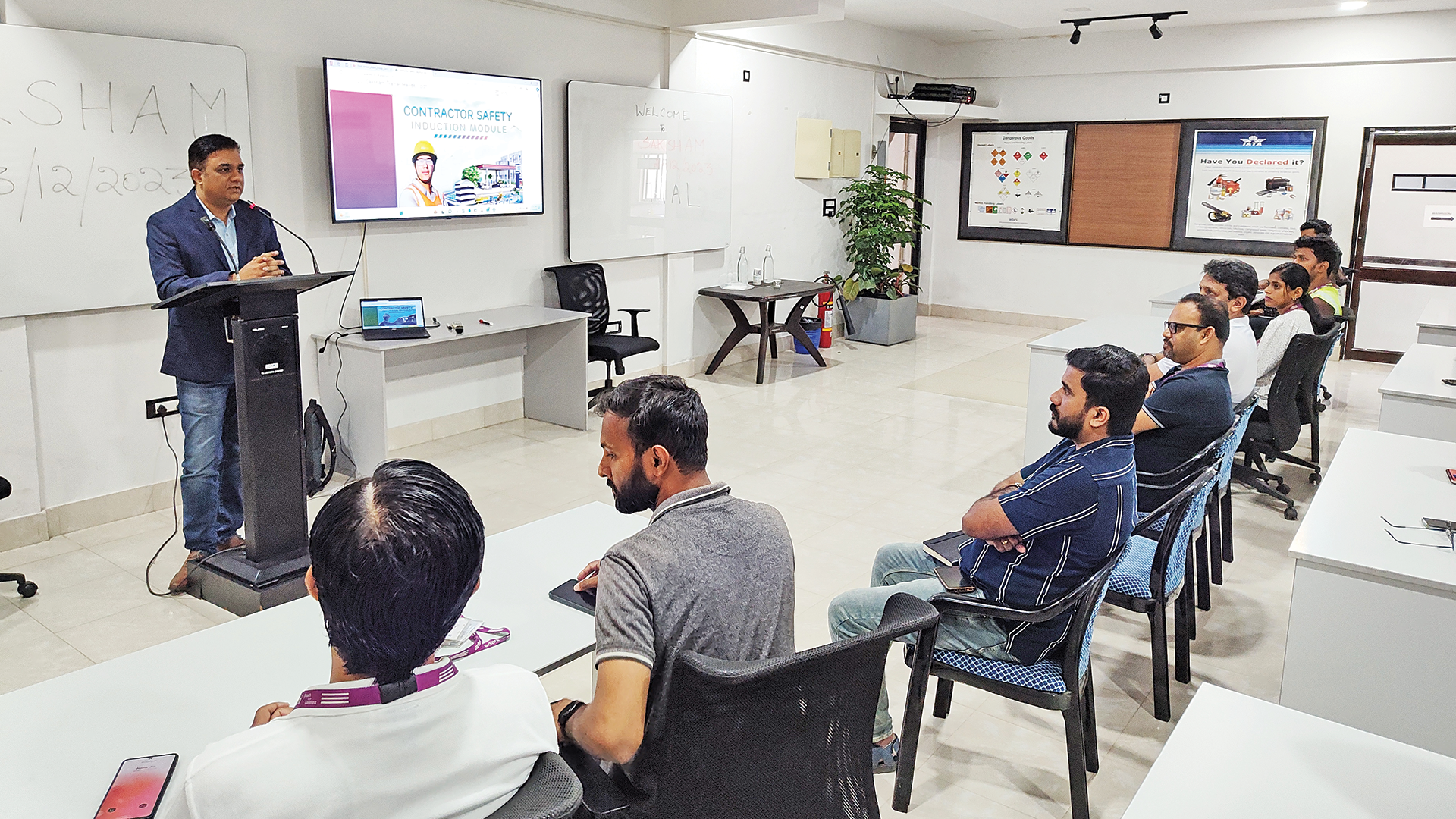
We view safety as a shared responsibility, one that extends beyond our operations into the communities around us. Through sustained engagement, awareness drives and practical training, we nurture a culture of safety, preparedness and resilience.
The RMRW BU conducted several safety programmes focussing on monsoon safety, hygiene, and emergency preparedness, covering ~1.39 million students across 426 schools and over 31,165 community members across 481 villages.
At Mundra, Adani Windtech (ANIL – WIND) marked National Safety Week with inclusive activities, including a 5 km Run for Safety, street plays, and wellness sessions, fostering widespread safety consciousness.
Advancing Safety Intelligence Through AI and Digital Innovation
We are harnessing advanced digital technologies and artificial intelligence (AI) to strengthen safety governance, enhance visibility and enable proactive risk management across the organisation.
SAFEXPlatform
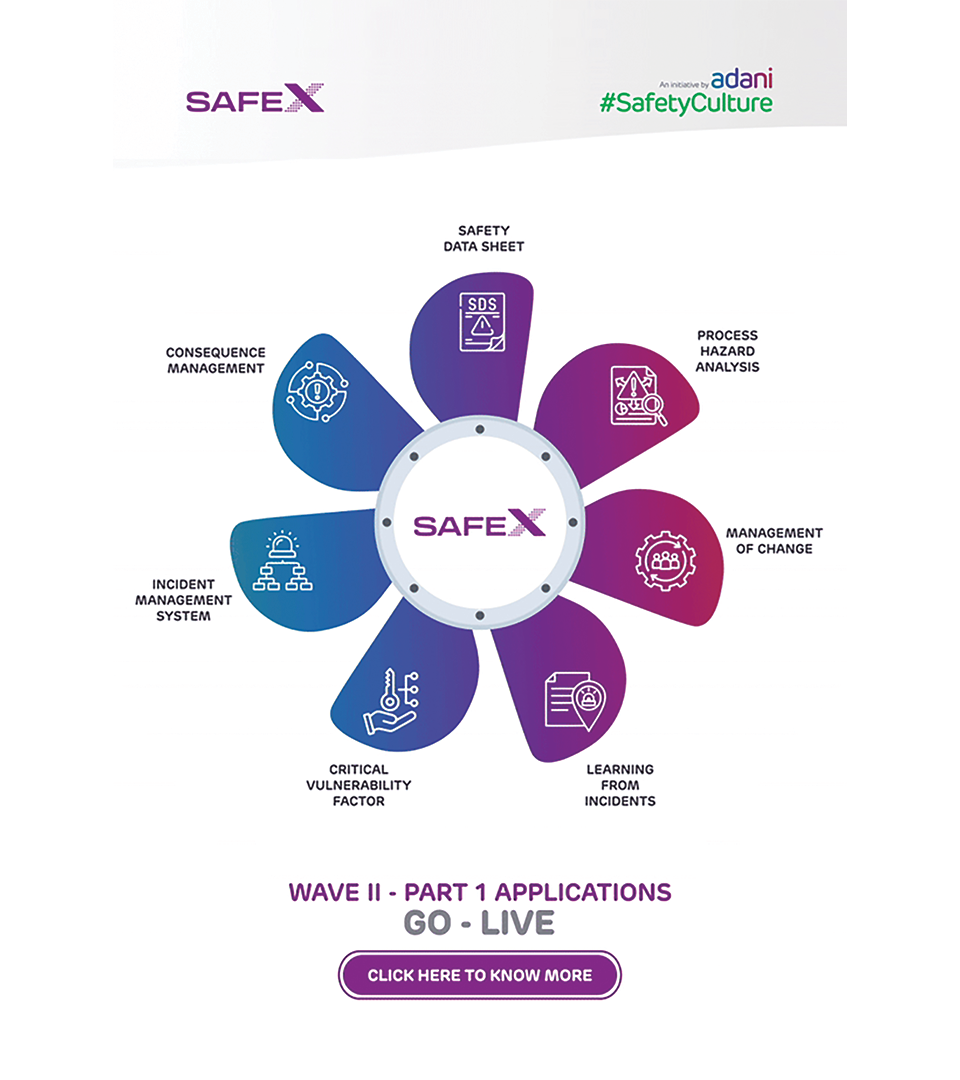
Through SAFEX, our enterprise-wide safety management platform powered by Benchmark Gensuite, we are embedding Generative AI to reimagine how safety data is captured, analysed, and operationalised across the organisation. SAFEX hosts AI agents and smart assistants that operate as digital co-workers, interacting in natural language, analysing large datasets, and delivering real-time insights to safety teams.
Key Capabilities
- Describe-It AI: Creates comprehensive and standardised incident and inspection reports
- PSIF AI (Potential Serious Injury and Fatality): Benchmarks reported incidents against global datasets to assess severity and identify latent risks
- SIC AI (Significant Incident Communication): Generates incident summaries, root cause insights, and lessons learned for timely and consistent communication across sites
Benefits
- Automates routine processes and reporting
- Enables sharper, data-driven decision-making
- Strengthens enterprise-wide smart oversight and risk visibility
AI-Driven OversightFor Safer Air Travel
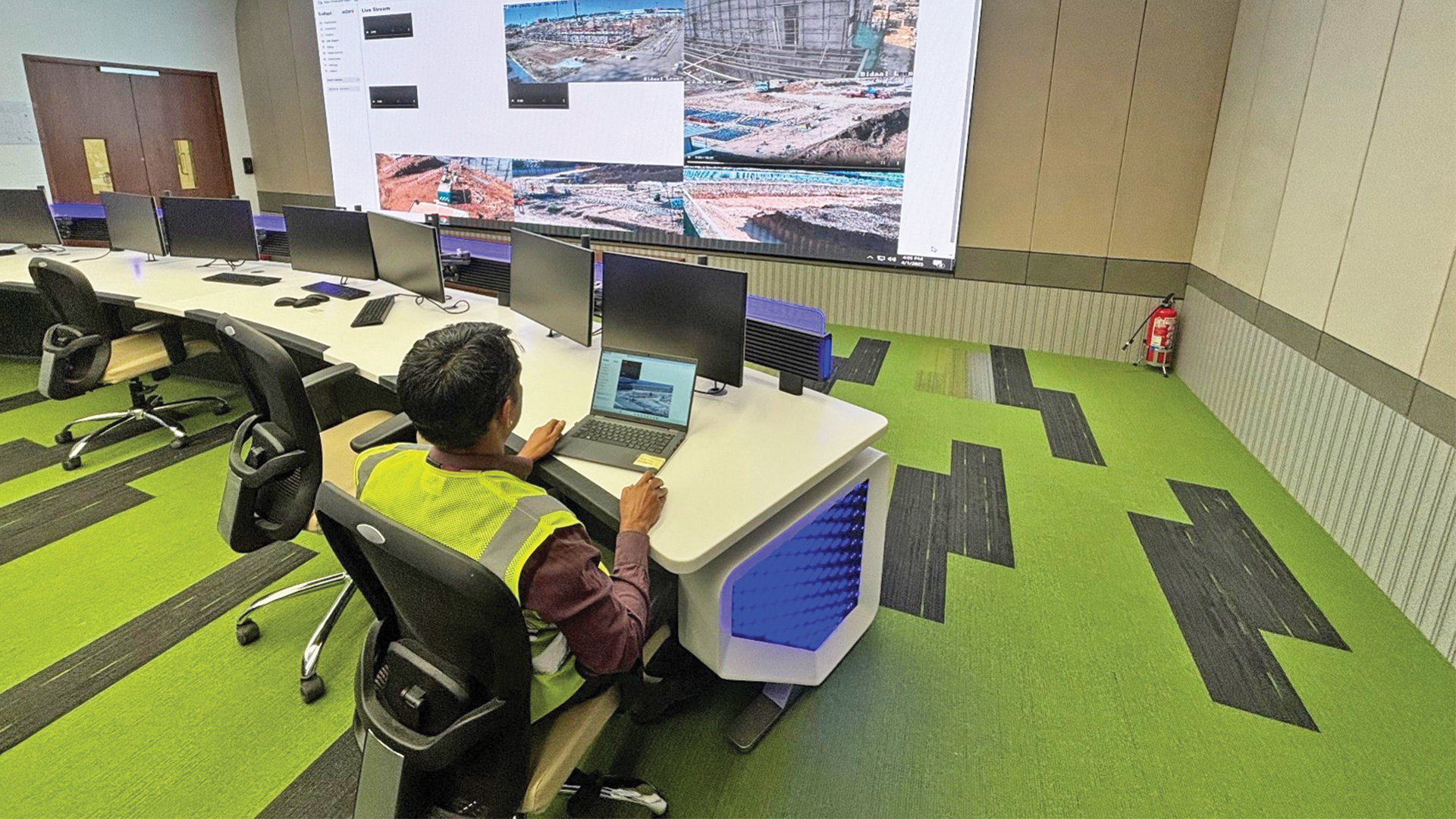
Adani Airports Holding Limited has adopted a technology-led approach to safety management through Airport Operations and Unified Emergency Control Centres (AOCC/UCC) integrated with AI-enabled camera systems across new project sites. The initiative aims to enhance safety oversight, prevent incidents and ensure safer air travel operations.
AI-Led Enablement
- Enables round the clock remote monitoring of construction and operational activities from the corporate headquarters
- Provides a centralised digital dashboard for streamlined keeping, and safety performance visibility
- Identifies unsafe acts and conditions early, facilitating immediate corrective interventions
- Simplifies incident investigations through structured data capture and analysis
Benefits and Impact
Over 13,000 safety observations recorded and 300 probable serious incidents averted during the reporting period, reinforcing proactive risk prevention and enhanced safety performance.