Leading through Responsible and Ethical Conduct

At Adani, governance underpins long-term value creation. As we scale, amid heightened stakeholder expectations, we remain committed to integrity, transparency, and accountability.

The governance structure at Adani Enterprises Limited is rooted in a strong culture of responsibility and ethics. Built around the key tenets of transparency, disclosure, compliance and accountability, our corporate governance processes and policies are crafted to drive sustainable growth. We emphasise fairness and integrity in all our activities, to steer equitable growth and long-term value creation. We have strategically embedded ESG principles into our governance framework to foster sustained stakeholder trust and confidence.
Key Linkages
Material Topics
Strategic Priorities
Key Risks and Opportunities
Capitals Impacted
 Financial capital
 Human capital
 Intellectual capital
 Social & Relationship capital
 Manufactured capital
 Natural capital
SDGs Aligned

Governance Practices-in-Action at the Adani Portfolio of Companies
- Family office has transitioned from a promoter-led structure to a professionally managed institution by filling key leadership roles in each entity with domain experts in investment strategy, legal & compliance, risk management, treasury and governance
- Strengthened Board charter and relevant committee structures, maintaining independence on critical matters
- Adopted a formal operating model, including investment and risk committees with defined mandates, performance-linked evaluation metrics and periodic independent audits and reviews to monitor compliance with the SOPs and policies
- Initiated and disclosed the tax transparency audit across all portfolio companies
- Established a structured succession planning for seamless intergenerational governance
- Clear philanthropic goals and ESG-aligned investment strategies, with a separate team to evaluate ESG risks and opportunities, monitor and disclose performance through annual Integrated Reports, and/or ESG Reports
- Adopted and implemented secure digital platforms, AI-driven analytics and cybersecurity protocols for robust data governance
- Issue regular compendiums to transparently disclose our performance, credit and governance landscape, available on AEL website
Planned Initiatives to Strengthen Governance
Based on its strategic roadmap, the Adani Portfolio of Companies are currently in the process of formalising key initiatives and integrating strengthened assurance practices. The transition to the new framework is expected to be adopted within a three to five years horizon. These measures are planned to further enhance governance standards, and provide stakeholders with continued confidence in our stability, transparency, and resilience of both the family office and holding company structures within the Adani Portfolio.
| Criteria | Current Practices | Target Practices |
|---|---|---|
| Board Strength | 06 (min as per law) to 12 | Min. Directors on each entity: 8 |
| Board Independence | 50% | >50% |
| Skillsets | Heavier with ex-bureaucrats | Common + Specific BU requirements |
| Selection Process | Unstructured | Engaging third parties |
| Promoter / Nominee Director | Holds executive positions | Should be non-executive |
| Gender Equity | 10-20% | Min. 30% |
| Geographical diversity | None | Atleast one global director on the Board |
| Tenure of IDs | upto 3 years for max 2 terms. Can get re-elected in other group company | upto 3 years for max. 2 terms. Directors need to be unique for each entity |
| Training & Education | Min. 4 sessions | 4 Group Level sessions, besides BU specific engagements |
| Attendance | No fixed criteria | Min. 75% in Board and each Committee |
| Lead ID | No | Lead ID in each BU |
| Evaluation | Mix on internal + external | Mandatory external |
| Feedback | No formal process | Formal feedback and Action Taken Report (quarterly) |
Strategic Focus Areas across Capitals
We have aligned our focus areas to the six capitals, which we are continually strengthening to ensure enhanced stakeholder value creation. Our focus on these aspects of good governance helps drive higher productivity, better efficiencies, operational excellence, enhanced brand reputation, and increased investor confidence in the organisation.
| Capitals Impacted | Management Approach | Key Aspects |
|---|---|---|
 Financial Capital Financial Capital |
Maximise shareholders’ value through sustainable growth |
|
 Intellectual Capital Intellectual Capital |
Drive innovation to catalyse growth |
|
 Human Capital Human Capital |
Create a thriving workplace through skill development opportunities and promoting workforce inclusivity |
|
 Social & Relationship capital Social & Relationship capital |
|
|
 Manufactured Capital Manufactured Capital |
Build world-class infrastructure to drive efficiency, scalability, and long-term value creation |
|
| Natural Capital |
Ensure responsible resource utilisation and environmental stewardship |
|
Robust Corporate Governance Structure
Led by our strong commitment towards ensuring good governance across the organisation, we have adopted a robust structure to enable effective conduct of business. We follow a one-tier Board system, with the Board of Directors at the helm of AEL’s corporate governance. The Board actively formulates the Company’s strategy, oversees management, and ensures compliance. This Board-led governance structure helps in enhancing accountability and strategic decision-making at the Company, enhancing the stakeholder trust.
The Board at AEL is committed to conducting the Company’s business operations based on the tenets of courage, trust and commitment, upholding the highest standards of ethics and integrity.
Continual Reinforcement of the Board Structure
Commitment to Strengthen Corporate Governance
| Pathway | Commitment | Progress in FY 2025-26 |
|---|---|---|
Tenure of Independent Directors | Up to three years for maximum two terms | This has been implemented as a standard practice for any new Independent Director who is onboarded |
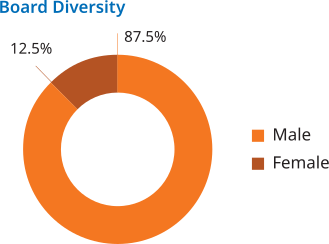
Gender Diversity | Minimum 20% female directors on the Board | 12.5% Women Directors |
Management Ownership | CEO and member of executive committees to have share ownership | Under discussion phase |
Related Party Transactions | Independent 3rd party review & reporting | Implemented for the Company |
Training & Education | Minimum 4 sessions in a year for education of Independent Directors | 4 training sessions conducted in FY 2025-26 |
Policy Assessments | Independent assessment of effectiveness of corporate governance policies | Planned for FY 2026-27 |
Board Composition
The AEL board comprises highly experienced individuals with a strong reputation and extensive business expertise. It has a good and diverse mix of Executive and Non-Executive Directors, with 50% of the Board members being Independent Directors, including an Independent Woman Director. The Board composition is in conformity with the applicable provisions of the Companies Act, 2013 (“Act”) and SEBI Listing Regulations, as amended from time to time, as well as other applicable statutory provisions.
Board’s Snapshot and Composition
Board’s Snapshot
Independent Directors on the Board
Women Directors on the Board
Board’s average tenure of Board of Directors
Directors with > 20 years of experience
Board meetings held during the year with
Average attendance (minimum requirement: 16.67 %)
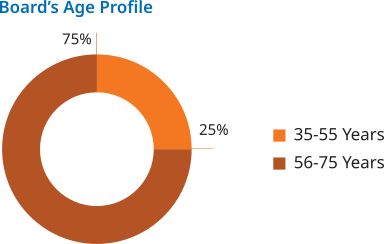
Average age of Board of Directors
Statutory and Non-Statutory Committees chaired by Independent Directors
| Particulars | Number of Members |
|---|---|
| Executive Directors | 4 |
| Independent Directors | 4 |
| Other Non-Executive Directors | 0 |
| Total Board size | 8 |
Board Diversity and Inclusion
Board and Management Oversight
Our Board and its committees, as well as the leadership, ensure effective oversight of the Company’s business through clearly defined roles. This enables functional efficacy and compliance.
Board’s Role
As the Company’s highest corporate governance authority, the Board is mandated with ensuring oversight of the Company’s governance systems and processes. Specialised sub-committees aid the Board in maintaining oversight of our governance practices.
Key Responsibilities
- Active oversight of our business strategy, key developments, and major activities – this ensures integrity and transparency in the conduct of our business operations, ensuring compliance and alignment with corporate values.
- Responsibility to operate in a manner designed to meet the evolving aspirations of the stakeholders and the various societal expectations.
- Review of AEL’s Annual Integrated Report, and sustainability-related disclosures and publications through the Board’s Corporate Responsibility Committee (CRC), which provides assurance to the Board on the ESG aspects.
Please refer to the CRC’s Charter for more details.
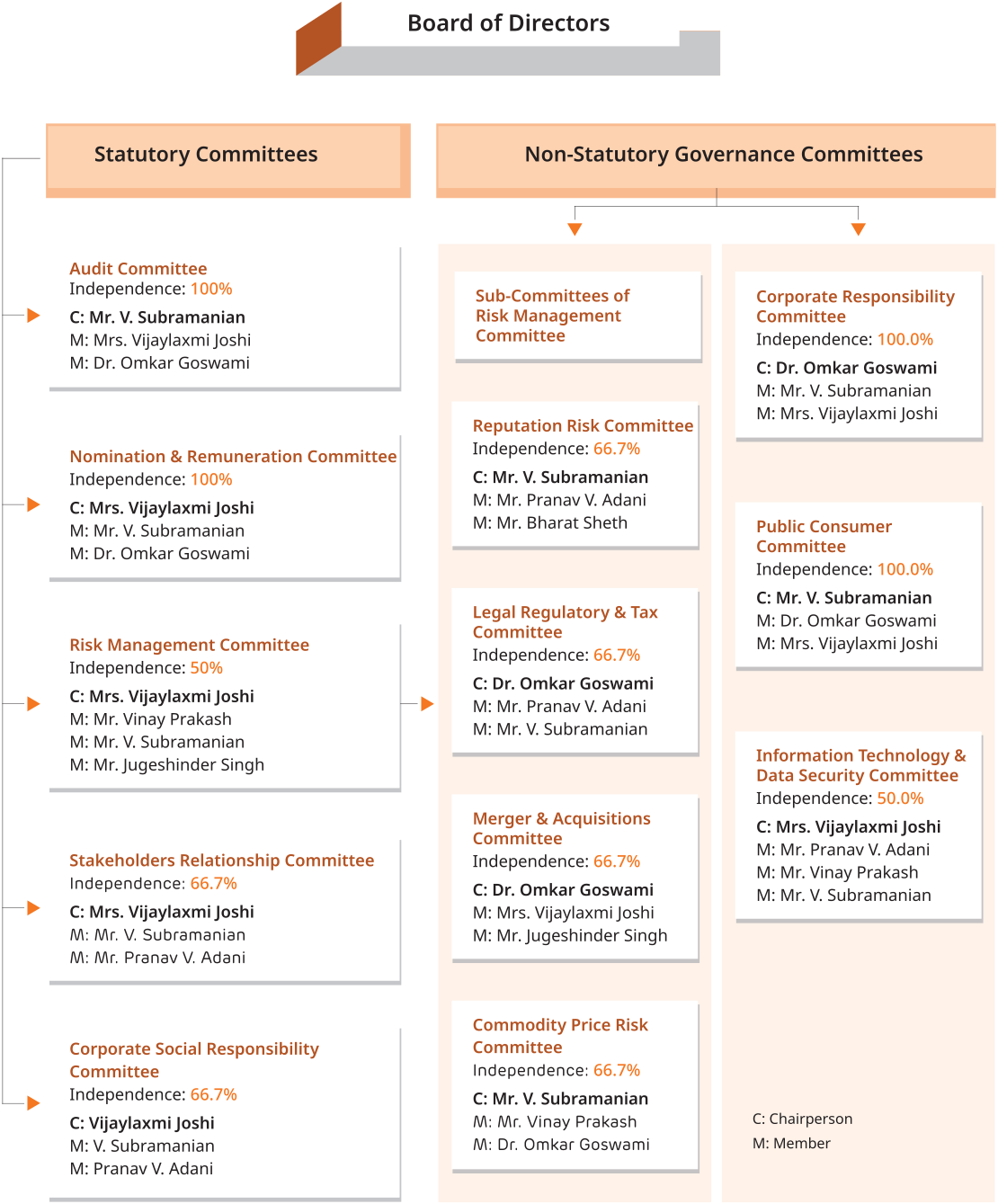
AEL’s governance architecture relies on a well-structured network of statutory and non-statutory committees. These committees operationalise the Board’s strategic direction, strengthen oversight, and ensure disciplined and transparent execution across the Company.
Board Committees
Our committees are set up under the formal approval of the Board to carry out clearly defined roles. As a part of good governance practice, the specific roles assigned to the committees are considered to be performed by members of the Board.
The committees are constituted to handle specific activities, and ensure speedy resolution of diverse issues. The committees operate under Board-approved charters, and report back to the Board at defined intervals. The Board directly supervises the functioning of the committees, and is responsible for their actions. The minutes of the meetings of all the committees are placed before the Board for review.
100% of the Statutory and Non-Statutory committees of the AEL Board are chaired by Independent Directors, underscoring our commitment to transparency and ethical conduct.
Key Governance Committees
Roles and Responsibilities
- Oversees Company’s risk governance, assessment (including ESG risks), and implementation of risk policies, practices, and plans
- Assesses climate-related regulatory and policy risks to proactively manage emerging risks
- Reports to, and assures the Board on findings and recommendations for effective risk management
Roles and Responsibilities
- Board-led committee - oversees and enhances stakeholder engagement, including shareholders, debenture holders, other security holders, and entities like rating agencies and regulators
- Safeguards stakeholders' interests, and strengthens trust and transparency through effective communication, and addressing their concerns
Roles and Responsibilities
- Directs integration of ESG agenda into Company’s operations and assures the Board on progress towards ESG goals
- Oversees formulation and implementation of ESG and climate change-related policies
- Oversees management of ESG and climate issues in line with UNSDGs, national and international ESG reporting and rating standards, and industry best practices
- Reviews Company’s stakeholder communication, including sustainability, ESG & Climate reports, ESG disclosures, ratings, scores and improvement plans
- Receives quarterly updates from the Corporate Sustainability Team on individual business-specific ESG progress
Roles and Responsibilities
- Guides Company’s efforts towards community engagement and community’s welfare and development programmes
- Identifies CSR initiatives, recommends the budget allocations, and oversees effective implementation of CSR programmes in line with the CSR policy
- Reports to the Board and ensures compliance with legal requirements
Board’s Oversight on Economic and ESG Impacts
The Board, along with its committees including the Corporate Responsibility Committee (CRC), are mandated with overseeing the management of the Company’s environmental, social and economic performance. Our governance committees, as delegated by the Board, handle the specific responsibilities with regard to our climate and ESG commitments.
more about our ESG Governance in the Our Approach to ESG Section click here
Board Nomination, Selection & Remuneration
A well-defined policy on Directors’ appointment and remuneration lays out the guiding principles for selection of Directors and determination of independence at AEL. The policy guides the Nomination & Remuneration Committee (NRC) in identifying persons qualified to become Directors. It also aligns the remuneration of the Directors with performance and industry practice.
How NRC works
- It identifies and recommends individuals for appointment to the Board, based on defined criteria covering qualifications, experience, integrity, independence, diversity and leadership capability.
- It evaluates candidates for their professional expertise, positive attributes, and ability to devote adequate time, in line with the Company’s Remuneration Policy, Board Diversity Policy, and the requirements under the Companies Act and SEBI (LODR).
- It also uses performance evaluation outcomes and succession planning considerations to guide decisions on re-appointments and new nominations.
Board and MD’s Compensation
At AEL, we ensure optimum remuneration for the Board through our Remuneration Policy, which complies with applicable laws. The CEO’s compensation comprises fixed and variable components, structured around the following key components:
- Success Metrics for Variable Pay
- Long-term performance incentives
- Sustainability-linked incentives
- Clawback and Malus Policy
Our Board remuneration structure is designed to be fair, performance-oriented, and market-aligned, ensuring that compensation supports long-term value creation, sustained organisational performance, and good governance practices.
Role of Audit Committee
Critical matters relating to Internal financial controls, Internal audit findings, suspected fraud or irregularities, significant deficiencies in internal control, are first reviewed in the Audit Committee (AC) meetings. The AC reviews internal audit findings, suspected frauds, and internal investigations, and reports concerns to the Board where necessary. Discussions with statutory auditors on scope, significant findings, and areas of concern are escalated to the Board.
Our Nomination & Remuneration Policy
AEL has a formally approved a Nomination & Remuneration Policy (NRC) that lays down the principles, framework and governance standards for determining the appointment, evaluation and remuneration of the Board of Directors, Key Managerial Personnel (KMP) and Senior Management Personnel, in a structured and regulatory‑aligned manner. The Committee’s responsibilities are clearly stated in the terms of references as approved by the Board of Directors.
Board Mandates and Management Ownership
AEL provides clear and structured transparency on the mandates of its Board of Directors, including the nature of ownership, control mechanisms, and any potential influences shaping governance actions. We maintain a clearly defined governance structure that sets out the mandates, powers and responsibilities of the Board. These mandates stem from the Company’s constitutional documents (Articles of Association), Board-approved resolutions, and governance policies. Directors are required to comply strictly with these mandates to ensure ethical, accountable and transparent management of the Company.
| Promoter and Promoter Group Holding in AEL as on 31.03.2026 | |||||
|---|---|---|---|---|---|
| Sr. | Particulars | Nos. of Shares | Face Value per share (₹) | Amount Paid up Capital (₹) | % of Holding |
| A. Promoter & Promoter Group | |||||
| 1 | Gautambhai Shantilal Adani and Rajeshbhai Shantilal Adani (on behalf of S.B. Adani Family Trust) | 64,21,33,511 | 1 | 64,21,33,511 | 49.67 |
| 2 | Adani Tradeline Private Limited | 11,14,30,725 | 1 | 11,14,30,725 | 8.62 |
| 3 | Afro Asia Trade and Investments Limited | 3,38,79,664 | 1 | 3,38,79,664 | 2.62 |
| 4 | Worldwide Emerging Market Holding Ltd | 3,38,79,664 | 1 | 3,38,79,664 | 2.62 |
| 5 | Spitze Trade And Investment Limited | 44,64,320 | 1 | 44,64,320 | 0.35 |
| 6 | Gelt Bery Trade And Investment Ltd | 156 | 1 | 156 | 0 |
| 7 | Flourishing Trade And Investment Ltd | 3,80,10,224 | 1 | 3,80,10,224 | 2.94 |
| 8 | Kempas Trade And Investment Ltd | 4,14,67,216 | 1 | 4,14,67,216 | 3.21 |
| 9 | Infinite Trade And Investment Ltd | 2,72,19,584 | 1 | 2,72,19,584 | 2.11 |
| 10 | Emerging Market Investment DMCC | 2,14,98,400 | 1 | 2,14,98,400 | 1.66 |
| 11 | Hibiscus Trade and Investment Ltd | 22,40,000 | 1 | 22,40,000 | 0.17 |
| 12 | Adani Infra (India) Limited | 90,00,000 | 1 | 90,00,000 | 0.70 |
| 13 | Shri Gautam S. Adani | 1 | 1 | 1 | 0 |
| 14 | Shri Rajesh S. Adani | 1 | 1 | 1 | 0 |
| Total (A) | 96,52,23,466 | 1 | 96,52,23,466 | 74.67 | |
Board Diversity Policy
We have a dedicated Board Diversity Policy to guide our approach to diversity in Board composition.
Key tenets of the policy
- Fostering gender diversity, emphasising the uniqueness of perspective brought into decision-making by women directors
- Nurturing diversity in nationality, cultures and ethnicity, strengthening our strategic discussions and decision-making processes
- Ensuring diversity in skills and expertise across various domains, such as finance, operations, risk management, sustainability, ESG & technology
Board Meetings and Reporting
The Board calendar for the financial year 2026-27 is provided under the Corporate Governance Report of this Integrated Annual report.
Board Performance Evaluation
The Board and its committees, individual Directors, and the Chairman undergo a comprehensive evaluation mechanism, which assesses various aspects of Board’s functionality. The results and actionable insights from the performance evaluation are discussed with Independent Directors and the Board, and appropriate actions are taken promptly.
Internal evaluation
A formal, multi-layered evaluation mechanism is in place for assessing the effectiveness of the Board, its Committees, Individual Directors, and the Chairperson. The process is driven by the Nomination & Remuneration Committee (NRC), as mandated under Section 178 of the Companies Act, 2013 and SEBI (LODR).
External evaluation
We have documented a governance enhancement plan to transition from internal assessments to an independent external evaluation. The Company had been conducting internal evaluations till now. As a better governance practice, the NRC proposed engaging an independent external agency to perform the Board, Committee, and Director evaluations. This indicates that AEL has institutionalised a pathway for external assessments aligned with global best practices.
The external agency, once appointed, is expected to conduct evaluation using the same comprehensive criteria that NRC has approved, including:
- Board composition, skills & diversity
- Quality of meetings & deliberations
- Strategic oversight
- Effectiveness of Committees
- Individual Director contribution
- Additional Chairperson‑specific parameters
Board Familiarisation and Competence Building
Competence building and familiarisation of the Board in alignment with the developments in the external ecosystem is an ongoing process at AEL. In FY 2025-26, a total of four educational and engagement sessions were held for this purpose. The sessions, aimed at boosting the skills and knowledge of the Board on the emerging trends and best governance practices, covered the following topics.
Ensuring Ethics and Compliance
We have established a strong compliance framework to ensure ethics and integrity, along with adherence to all applicable laws and regulations, in our business conduct.
Our Compliance Officer, supported by the Internal Auditor, is responsible for providing oversight and ensuring implementation of compliance practices and protocols. This enables continued improvement in transparency and accountability across out operations. Aided by the Internal Auditor, the Compliance Officer also provides periodic updates to the Audit Committee of the Board regarding the compliance status and effectiveness of existing controls.
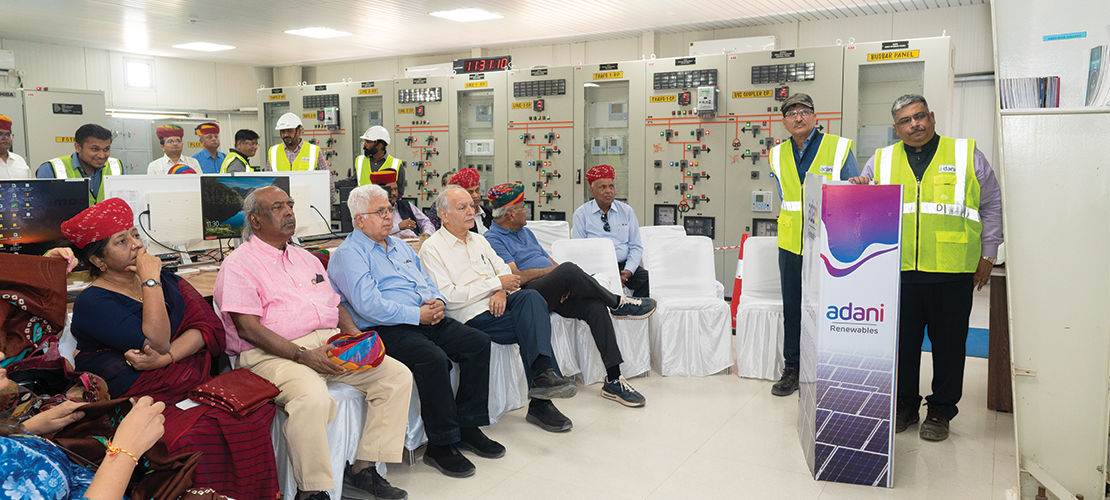
Our approach is designed to lay down clear expectations from our employees through the Code of Conduct, policies, communications, and training on integrity and ethical business conduct. It is crafted to promote stakeholder trust through stringent compliance with relevant laws. It is focussed on:
- Regular risk assessment and management
- Comprehensive policies, procedures and protocols
- Training and communication
- Whistleblower/vigil mechanism
- Grievance mechanism
- Regular internal and external reviews of compliance controls
- Meticulous investigation of reported grievances and whistleblowing complaints
- Implementation of corrective measures and compliance controls
Policy Commitments
We have adopted a comprehensive framework of governance policies to not only ensure compliance with statutory regulations but also to transcend them and adhere with best practices in management of sustainability topics. The policies are reviewed and approved by the AEL’s Board which is also the highest governance authority at AEL. We conduct regular trainings for our employees, workers, suppliers and contractors on various environmental, social and governance aspects of the operations, including environment, health and safety, cybersecurity, anti-bribery and anti-corruption, human rights, code of conduct.
Environment
| Policy Name | Focus Points | Stakeholder Groups in scope | Board-level authority responsible for development & review of policy |
|---|---|---|---|
ESG Policy | Sustainability, climate change mitigation, energy and water management | All Employees, Investors, Customers, Community | CRC, RMC, CSRC |
Climate Change Policy | Climate risk management strategies, aligned with global best practices | Government, Employees, Investors | CRC |
Environment Policy | Environmental performance improvement and responsible resource consumption | Government, Employees, Community | CRC |
Biodiversity Policy | Energy efficiency and renewable energy sources | Investors, Government, Employees | CRC |
Biodiversity Policy | Integrates biodiversity protection into business strategy | Employees, Community, Suppliers | CRC |
Resource Conservation Policy | Judicious use of resources, efficiency in procurement and supply chain | Suppliers, Community, Customers | CRC |
Waste Management Policy | Sustainable waste management practices across waste types | Suppliers, Community, Customers | CRC |
Water Stewardship Policy | Comprehensive water management, optimisation, and risk engagement | Suppliers, Community, Customers | CRC |
Social
| Policy Name | Focus Points | Stakeholder Groups in scope | Board-level authority responsible for development & review of policy |
|---|---|---|---|
Diversity, Equity, Inclusion Policy | Diverse representation and inclusive culture | All Employees, Investors | SRC, CRC |
Human Rights Policy | Compliance with international human rights standards | All Employees, Suppliers | CRC |
Occupational Health & Safety Policy | Creating a safe workplace for employees and wellbeing of communities | All Employees, Communities | CRC |
Corporate Social Responsibility Policy | Positive social and environmental impact, compliant with legal standards | Communities | CSRC |
Freedom of Association Policy | Respect for rights to freedom of association and collective bargaining | All Employees | CRC |
Prevention of Sexual Harassment Policy | Dignity and respect at workplace, prohibits unwelcome behaviour | All Employees | CRC |
Stakeholder Engagement Policy | Transparent communication with stakeholders to establish sustainable relationships | Community, Customers, Investors | SRC |
Employee Grievance Management Policy | Formalised process for addressing employee concerns fairly | All Employees | CSRC |
Supplier Code of Conduct | Lawful, professional, and fair business practices with suppliers | Suppliers | CRC |
Governance
| Policy Name | Focus Points | Stakeholder Groups in scope | Board-level authority responsible for development & review of policy |
|---|---|---|---|
Code of Conduct | High standards of business and compliance with laws | Board of Directors, Seniors Management and all employees | CRC, RMC, CSRC, SRC, LRTC |
Board Diversity Policy | Diverse backgrounds and perspectives of Board members | Board of Directors | Board |
Remuneration Policy | Competitive pay, clear performance benchmarks | Employees, KMPs, Directors | NRC |
Cyber Security and Data Privacy Policy | Protects IT infrastructure and data privacy | Employees, Customers, Investors | IT and Data Security Committee |
Whistle Blower Policy | Framework for secure whistle blowing, protection for stakeholders | All Employees, Communities | Audit Committee |
Anti-Corruption and Anti-Bribery Policy | Ethical business practices, strict action against non-compliance | Employees, Government | Audit Committee |
Prohibition of Insider Trading | Ethical business practices, strict action against non-compliance | Directors, Employees, connected persons | Audit Committee |
Related Party Transaction Policy | High standards of business and compliance with laws | KMPs, Directors and other related parties | Audit Committee |
NRC: Nomination and Remuneration Committee
CRC: Corporate Responsibility Committee
CSRC: Corporate Social Responsibility Committee
RMC: Risk Management Committee
SRC: Stakeholders’ Relationship Committee
LRTC: Legal Regulatory & Tax Committee
Code of Conduct
Ethical conduct is integral to our governance module, and we have established Code of Conduct policies for the Board and Senior Management, as well as the employees.
Code of Conduct for Board and Senior Management
Our Code of Conduct for the Board Members and the Senior Management personnel mandates integrity and ethics in their business conduct. Adopted by the Board, it governs the management of the Company’s operations.
All AEL Board Members and Senior Management personnel have affirmed their adherence to the Code, and also to a declaration to this effect, signed by the Managing Director. This affirmation is a part of annual compliance report reviewed by the Company Secretary. In addition, individual appointment letters are issued to the Independent Directors, specifying the terms of their appointment and their duties in accordance with the provisions of the Companies Act and applicable laws.
A template of such appointment letter is available at https://www.adanienterprises.com/investors/corporate-governance.
Employee Code of Conduct
Our Employee Code of Conduct lays down the ethical conduct, integrity, honesty, fairness and responsibility expected from our employees in the Company’s day-to-day operations.
Conflict of Interest
Under the Code of Conduct, the AEL Directors and Senior Management are explicitly prohibited from engaging in any situation that creates a direct or indirect conflict with the interests of the Company. These include activities that might lead to any undue gains or benefits for themselves or their relatives, partners or associates at the expense of the Company. Any Director found to have benefited unduly is required to reimburse the Company for the equivalent amount of the gain.
There were Zero cases of conflicts of interest in FY 2025-26, including cross-board membership, cross-shareholding with suppliers and other stakeholders, existence of controlling shareholders and related parties, their relationships, transactions, and outstanding balances.
Code of Internal Procedures and Conduct for Prevention of Insider Trading
The Adani Code of Conduct for Prevention of Insider Trading is approved by the Board, and inter alia, strictly prohibits Directors and employees from dealing in the securities of the Company while in possession of unpublished price-sensitive information in relation to the Company. We follow a Zero Tolerance policy with regard to the enforcement of the Code, and the Prohibition of Insider Trading Committee, established at Group level, deals in all such matters.
Anti-Bribery and Anti-Corruption
Underlining our zero tolerance towards all forms of corruption and bribery – both direct and indirect, we have implemented a formal policy on Anti-Bribery and Anti-Corruption (ABAC). The policy ensures compliance with national and international legal and ethical requirements with respect to bribery and corruption. As per the policy, we carry out periodic risk assessment across our business operations to identify potential risks of corruption and bribery, and develop necessary control mechanisms. Our risk assessment process is documented and reviewed by the CRC of the Board on an annual basis.
Prevention of Sexual Harassment
At AEL, we strictly uphold and promote the dignity of women and all individuals at the workplace, and have implemented a formal policy on Prevention of Sexual Harassment to ensure the same. The policy underscores our Zero Tolerance towards all forms of unwelcome behaviours categorised as sexual harassment. Any such issue is handled and addressed by Group Monitoring Committee, and the Internal Complaint Committees (ICC) at the unit level.
Remediation of Negative Impacts
Whistleblower Mechanism
We have in place a well-defined Whistleblower policy to ensure compliance with the Code of Conduct. The policy empowers employees and Directors to report any actual or suspected wrongdoings, unethical conduct, improper activities, and financial irregularities. We have provided several secure channels to enable our people to lodge a protected disclosure, and ensuring confidentiality and protection without the fear of retaliation.
Employees can send email to whistleblower@adani.com
Or
Write a letter to the Chairman’s Office in Ahmedabad
The whistleblower complaints, received as per the reporting matrix, are duly investigated by a team, comprising Internal Auditors and relevant officials in the organisation, under the supervision of the Board’s Audit Committee
The status report of all complaints, along with the corresponding actions taken, is presented to the Audit Committee on a quarterly basis for its review.
Integration of Policy Commitments
We have strategically embedded our policy commitments into our operational systems and processes across the organisation and the value chain.
- Robust sustainability and ESG governance structure led by the Board and its Committees (Corporate Responsibility Committee, Risk Management Committee, Stakeholder Relationship Committee and Audit Committee)
- Board Committees, supported by Management-level ESG Committee and Site/Business level teams, to drive our sustainability agenda at all levels
- Management Systems certified with International Standards such as ISO 14001, ISO 27001, ISO 45001, reinforced through regular internal and third-party independent audits
- Conduct of human rights due diligence to assess risks across own operations and value chain operations for new business engagements, covering Child labour, Forced / involuntary labour, Sexual harassment, Discrimination at workplace and Wages
- Undertaking supplier screening and assessments, supplier engagement and capacity building to improve their ESG performance and conformance with Supplier Code of Conduct
- Mandatory trainings for employees and workers on various ESG policies, including Code of Conduct, Environmental, Occupational Health and Safety, Human Rights, Information Technology and Data Security
- Mandatory induction sessions for new hires focussing on human rights and other critical ESG aspects
- Linking of a part of compensation of Business CEOs, CSO and Business Unit Managers to their performance on sustainability and ESG metrics
Whistleblower Complaints Reported in FY 2025-26
| Nature/Types of Breaches | Number of Complaints in FY 2025-26* | Confirmed Violations in FY 2025-26 |
|---|---|---|
| Corruption & Bribery | Nil | Nil |
| Discrimination & Harassment | Nil | |
| Customer Privacy Data | Nil | |
| Conflict of Interest | ||
| Money Laundering or Insider Trading |
* The details in the above table are reported on a standalone basis
Political Contributions
Total monetary value of financial and in-kind political contributions made directly and indirectly by the organisation in FY 2025-26: Nil
Resolving Stakeholder Grievances
Our Employee Grievance Management Policy is applicable to all our permanent employees and workers to provide them access to a timebound and effective grievance resolution mechanism. Employees can raise their concerns through online grievance redressal channel with utmost confidentiality. In FY 2025-26, at consolidated level, total 41 employee grievances were received, including 5 related to POSH. All the grievances have been successfully addressed and closed except 5 open complaints as on March 31, 2026.
We have formal grievance redressal mechanisms in place for our other key stakeholders, including supplier partners, communities and consumers, to listen to their concerns and address them effectively.
Read more about:
Stakeholder grievances in FY 2025-26 in BRSR (A-VII)
Community Grievances in BRSR-P8
Employees, workers and contractors’ grievance redressal in BRSR-P3
Systems and Procedures to Integrate Code
- Employees are encouraged to report all suspected breaches, directly to the Chairman of the Board or the Chairman of the Audit Committee, with the assurance to conduct thorough investigation
- Mandatory training sessions for all employees, including new joinees on the guidelines and principles outlined in the Code of Conduct
- Mandatory annual e-training for all employees on Anti-Bribery and Anti-Corruption (ABAC) Policy
- Annual performance review process integrates employees’ adherence to the Code of Conduct. Employee remuneration is directly linked to compliance, with violations impacting their compensation
Cybersecurity and Data Privacy
ISO 27001:22
(Information Security Management System) certification obtained for AEL
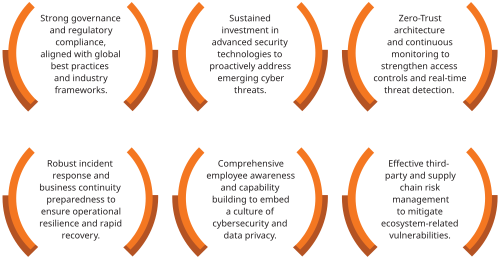
Pillars of our Information and Cybersecurity Strategy
Cyber Security Governance Framework
We have established a robust governance framework to ensure effective information security and customer data privacy, with a strong focus on building and sustaining a cyber-secure digital infrastructure. Governance, Risk and Compliance (GRC) forms a cornerstone of this framework, providing a structured approach to managing digital systems, third-party risks, and regulatory obligations. The GRC technology enabled framework enables proactive risk identification and mitigation, strengthens internal controls, and ensures adherence to applicable regulatory and statutory requirements. It also facilitates continuous and autonomous audit and compliance validations, enhancing transparency, accountability, and real-time assurance across the organisation.
- 4-member Information Technology & Data Security Committee (IT & DS), with 50% Independence, chaired by an Independent Director
- Oversees and reviews corporate policies, plans and programmes related to enterprise cybersecurity and data protection risks associated with the company and its IT infrastructure
- Dedicated charter, available on the Company’s website, guides the company’s operations
- Responsibility for implementation of necessary systems and procedures entrusted to Chief Information Security Officer (CISO) of each division
- Protection of organisational assets by optimising efficiency and effectiveness of security processes and infrastructure
- Strict compliance by all units with IT and cybersecurity policies within their operations
- Monitoring by units of their IT systems, along with regular risk assessment and implementation of necessary data security protocols
- Training of all employees, in alignment with the global best practices
Digitalisation and Cybersecurity Leadership in AEL
Dr. Vinay Prakash
(Executive Director - AEL’s Board)
- Over 20 years of experience in Digitalisation, Information and Cybersecurity, at the Adani Group
- Instrumental in overseeing and leading digitalisation initiatives in Adani’s Natural Resources business
- Serves as a member of the Board-level Information Technology and Data Security Committee (IT&DS), providing strategic guidance on cybersecurity to the management
Shivkumar Pandey
(Chief Information Security Officer – Adani Group)
- Experienced professional with 24 years of proven track record in cybersecurity, and securing national critical infrastructure institutions
- Visionary leader in the development of robust defence strategies for complex, highly regulated environments
- Proficient in safeguarding critical assets and driving innovation in cybersecurity
Digital Personal Data Protection (DPDP)
We have conducted a comprehensive Data Privacy Impact Assessment (DPIA) and the necessary policies, procedures, and control mechanisms and enabled to enable compliance with the provisions of the newly enacted Digital Personal Data Protection (DPDP) Act, 2023.
Cybersecurity Certification
Our IT infrastructure and information security management system are ISO 27001 certified. This ensures high level of data security and business continuity, even during cyber incidents or disasters.
Committed to Protecting Assets and Ensuring Trust
Aligned with our commitment to the protection of our cyber assets and ensuring trust, we continue to invest in advanced and specialised cybersecurity technologies for the development of in-house capabilities against cyber risks.
- Centralised 24x7 Cyber Security Operations Center (SOC) continuously monitors, detects, analyses, and responds to cyber threats across enterprise systems, leveraging AI-enabled security analytics.
- AI and ML-driven threat detection capabilities enhance proactive risk identification, behavioural analysis, and automated mitigation of emerging cyber threats.
- Robust Operational Technology (OT) security framework safeguards critical infrastructure, ensuring operational continuity, safety, and regulatory compliance.
- Enabled OT Cybersecurity Experience Centre established to enable benchmarking, capability development, cyber range simulations, and security product testing.
- In-house Application Security (AppSec) function integrates DevSecOps practices, including SAST and DAST, to proactively assess internally developed applications and maintain a secure development lifecycle.
- Data Loss Prevention (DLP) solutions monitor and control data transfers to prevent unauthorised data exfiltration and protect sensitive corporate information.
- Enterprise-wide Identity and Access Governance (IAG) enforces role-based access controls and strengthens identity lifecycle management.
- Advanced perimeter security controls implemented to monitor, detect, and safeguard network boundaries against external threats.
Cyber Training and Awareness
Recognising that employee capability is a critical line of defence in safeguarding data protection and privacy, we have institutionalised structured and mandatory cybersecurity awareness and skill development programmes across the organisation. These regular training initiatives including phishing as well as social media simulations are designed to equip employees with the knowledge, vigilance, and practical tools required to identify, prevent, and respond effectively to evolving cyber threats. Role-based and specialised training programmes are delivered to address function-specific risk exposures and responsibilities, ensuring targeted capability enhancement across business and technology teams. Through continuous learning, simulated exercises, and awareness campaigns, we are embedding a strong culture of cybersecurity, accountability, and data privacy throughout the organisation.
Information Security and Data Privacy Architecture
- Designed and build on NIST and ISO Standards of Information Security Management Systems
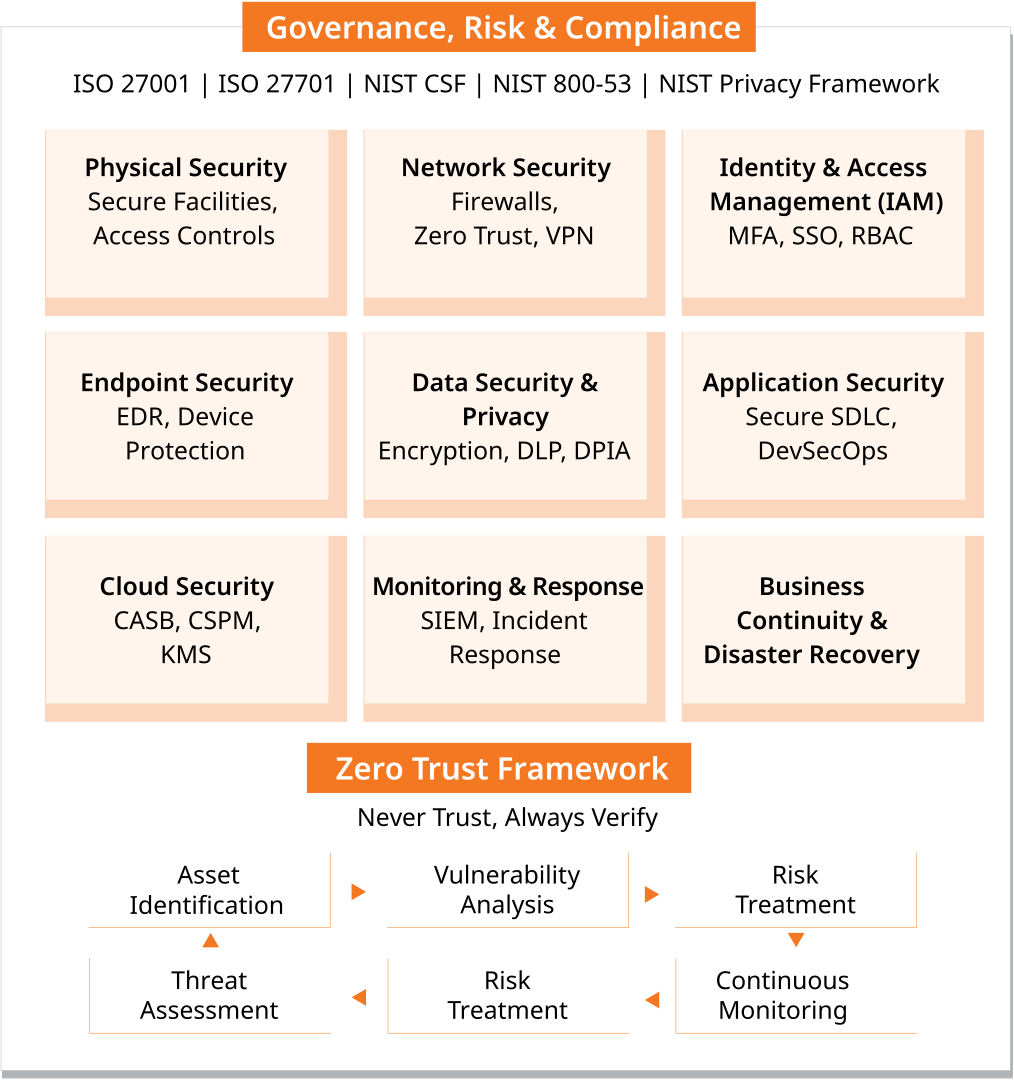
Defence Model and Technical controls
Covered above
Incident Management and Response Mechanism
Through a comprehensive Cybersecurity Incident Management Policy and Procedure with a defined Cybersecurity Crisis Management Plan and periodic simulations.
Measures to Ensure Compliance
- Internal Audits: Periodic internal audits conducted by the Cybersecurity GRC team to assess adherence to information security policies and controls.
- Surveillance Audits: Independent surveillance audits carried out by accredited certification bodies to ensure continued compliance with the ISO/IEC 27001:2022 framework.
- Independent Assurance Reviews: Reviews performed by the Management Audit and Assurance Services (MAAS) team to provide additional oversight and independent validation of security practices.
- ISMS Objective Monitoring: Continuous monitoring and evaluation of Information Security Management System (ISMS) objectives aligned with ISO/IEC 27001:2022 requirements.
- Governance and Compliance Oversight: Regular tracking of compliance metrics and remediation actions through established governance forums to ensure sustained adherence to security standards and regulatory requirements.