 Airports
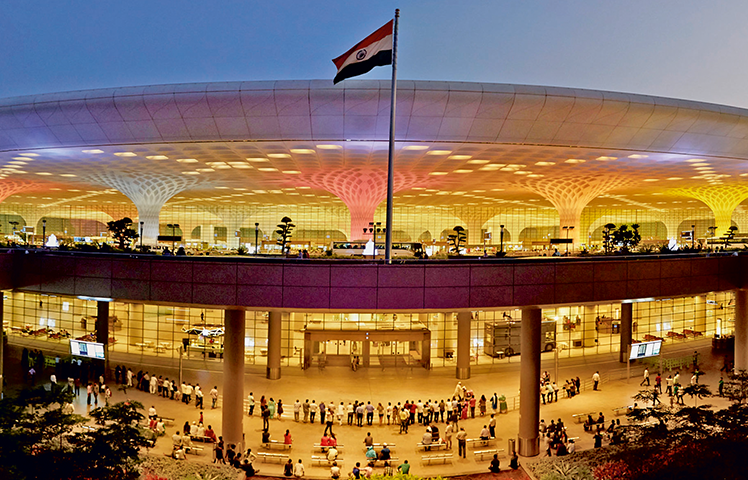
Vision
To be a world-class leader in businesses that enrich lives and contribute to nations in building infrastructure through sustainable value creation

Our airports are more than just transit points; they are engines of economic growth, enhancing regional connectivity, creating employment opportunities, and redefining the travel experience through service excellence.
- Mr Arun Bansal, CEO, AirportsBusiness Overview
Adani Airport Holdings Limited (AAHL) aims to transform India’s aviation landscape by delivering world-class airport infrastructure, seamless passenger experiences, and technology-enabled services across its portfolio. With a strong focus on safety, operational excellence, and customer-centricity, AAHL is enhancing every stage of the passenger journey through digital platforms, advanced analytics, and smart, contactless solutions.
AAHL is responsible for the development, operation, and management of multiple airports across India, continuously modernising terminals and runways, adopting sustainable practices, and integrating advanced technologies to improve efficiency and passenger convenience. Our vision is to scale Adani Airports into a globally integrated aviation platform, positioning India as a world-class aviation hub while reimagining airports as vibrant urban epicentres of consumer engagement. Seamlessly integrated through Aviio and Adani One, we deliver a frictionless, technology-enabled journey for travellers.
AAHL currently manages eight airports, including recently commissioned Navi Mumbai International Airport, a major greenfield addition. A modern marvel in its own right, it redefines the boundaries of innovation and infrastructure excellence and strengthens AAHL’s position as a leading private airport operator.
8
- Airports across India
20 million capacity addition
- Operations started at greenfield Navi Mumbai International Airport
23%
- Market share in passenger traffic
29%
- Market share in cargo volume
21%
- Market share in air traffic movements
Product/Service Offerings
AAHL’s core products and services include modern passenger terminals with world-class amenities, efficient cargo handling, and seamless airside and terminal operations, supported by advanced technologies and data-driven systems. We also provide a range of value-added services, including premium lounges, curated retail and dining, and digital platforms that enable a smooth and personalised travel experience.
Beyond aviation, AAHL continues to expand non-aeronautical businesses, driving commercial growth through retail, hospitality, entertainment, and city-side developments such as business parks, hotels, and event spaces. These integrated ecosystems position airports as thriving urban hubs, contributing to regional development.
Guided by innovation, sustainability, and strategic partnerships, AAHL leverages technology and analytics to deliver seamless experiences while setting new benchmarks in airport management and operations.
Business Opportunities
Diversified Revenue Streams
Airports benefit from a unique mix of aeronautical, non-aeronautical, and city-side development revenues, combining infrastructure assets with the potential of consumer-driven businesses. While modernisation of core infrastructure ensures steady returns, expansion of retail, hospitality, and commercial developments significantly boosts passenger engagement and revenue diversification. A strong consumer-centric approach continues to unlock higher growth and value creation.
Innovation at Airports
AAHL is driving innovation to enhance passenger experience and operational efficiency:
- Biometric Travel (Digi Yatra): Facial-recognition-enabled, touchless passenger journeys that reduce wait times and improve security.
- Adani One Digital Platform: A unified app offering end-to-end travel services, creating a connected and personalised airport experience.
- AI-Powered Passenger Assistance: Technology-enabled support for elderly and differently-abled passengers through real-time monitoring and assistance.
- Smart Infrastructure: Self-check-in, self-bag drop, and integrated baggage handling systems to streamline passenger processing.
- 5G-Enabled Operations: High-speed connectivity enabling real-time data access and improved service responsiveness.
- Automated Traffic and Cargo Systems: Real-time cargo tracking and stakeholder coordination through digital cargo management platforms.
- Sustainability Commitment: Progress toward net-zero emissions targets through energy-efficient operations and green infrastructure.
Burgeoning Growth Potential
Strong economic growth and rising air travel demand in emerging markets, particularly Africa and Southeast Asia, present significant opportunities for airport operators. Strategic expansion into these underpenetrated regions can diversify revenues, strengthen global presence, and create long-term value.
Brand Building and Global Connectivity
International operations enhance brand credibility, visibility, and strategic partnerships, positioning Indian operators as global aviation players. Greater global integration also strengthens India’s role as a regional and international aviation hub, attracting airlines, boosting tourism, and supporting broader economic growth.
Key Highlights of FY 2025-26
- Commenced commercial operations at greenfield Navi Mumbai International Airport on December 25, 2025, an important step in enhancing India’s air infrastructure capabilities.
- Successful inauguration of new terminal building at Guwahati Airport on December 20, 2025.
Non-Aero Business
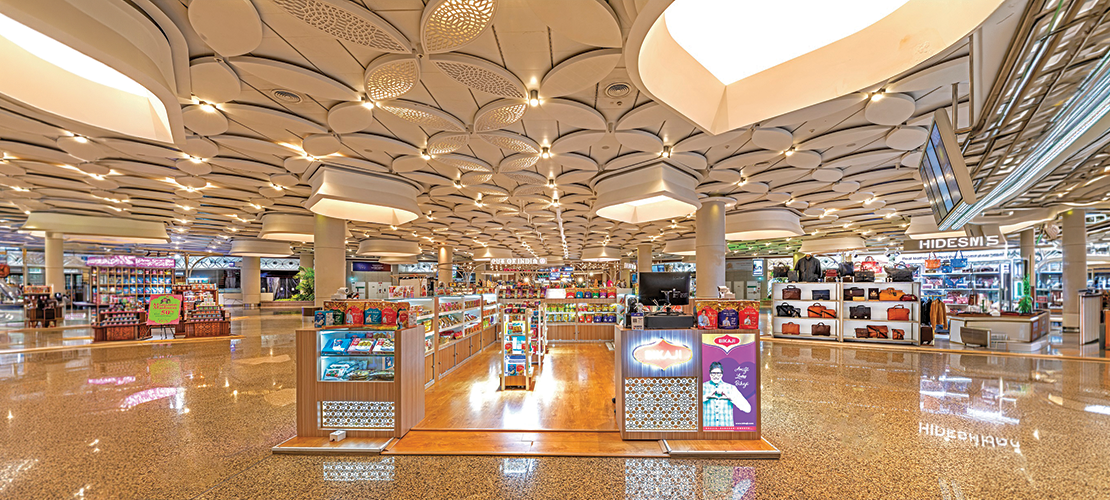
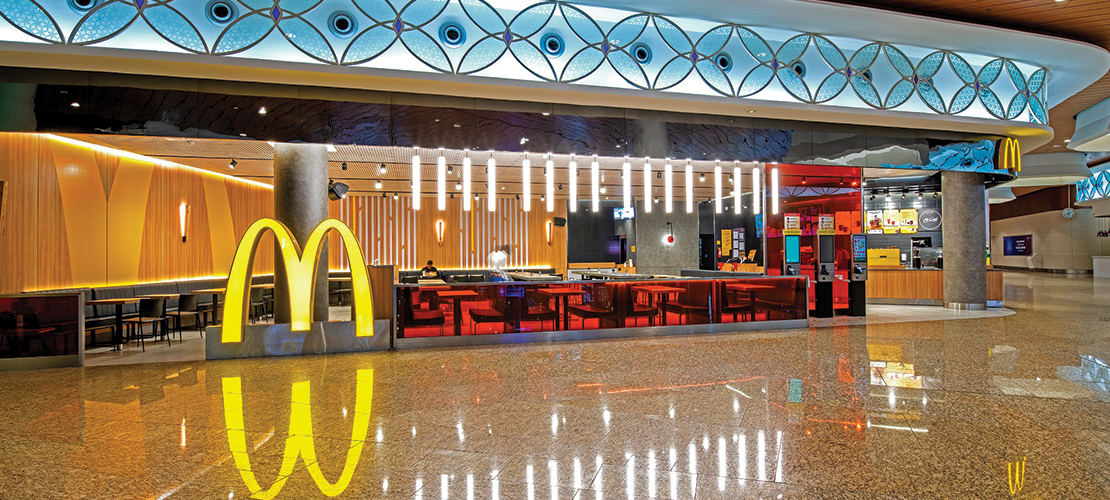
AAHL is redefining the airport experience by transforming terminals into vibrant destinations that extend far beyond traditional aviation services. Today’s airports are dynamic consumer ecosystems, blending retail, hospitality, entertainment, and digital innovation, and we are at the forefront of this evolution.
Driven by advanced analytics, technology integration, and strategic partnerships, our Non-Aero portfolio aims to transform the passenger journey from anxiety to excitement, curating world-class brands, premium lounges, immersive retail formats, and seamless digital touchpoints.
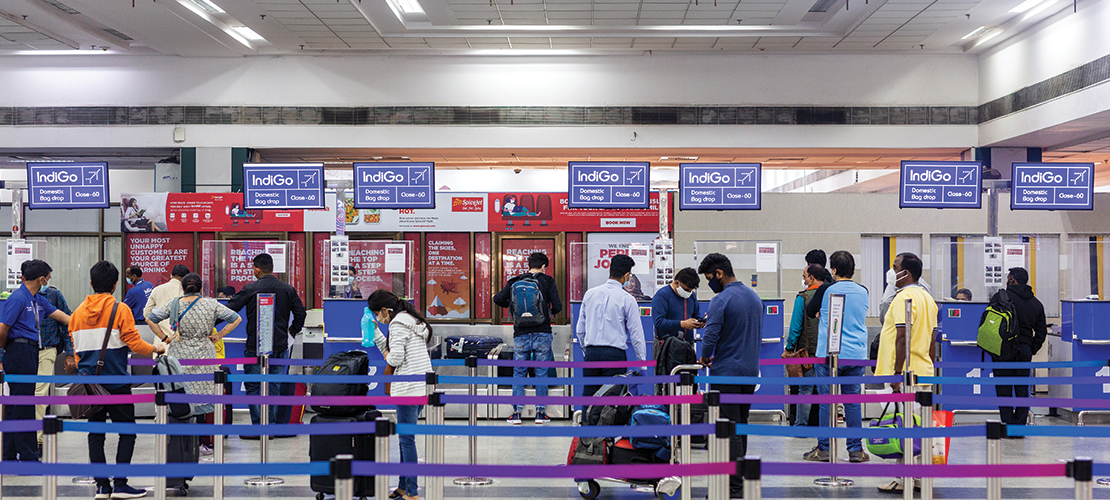
Our Non-Aero growth and revenue model is structured around seven strategic pillars:
Transition to Joint Venture (JV) Operating Model
AAHL is accelerating its JV driven transformation in the Non-Aero business, with Retail, F&B, Duty Free, and Lounges now operating under a Joint Venture (JV) model. The JV structure leverages industry-leading partner expertise, retains strategic command over sales, operations, and growth, improves revenue visibility and operational performance, and strengthens consumer penetration.
Advertising Insourcing
We successfully insourced the advertising business under Skyiwave, enabling 100% retention of long-term clients, end to end control of the media value chain, improved asset utilisation and yield management while unlocking the ability to deliver innovative, digital-first formats and deeper brand partnerships, thereby reinforcing our leadership in airport media solutions.
Duty Free Business – Diversification
Premiumisation Driven by Non-Liquor Categories
The Duty-Free portfolio is witnessing a clear shift toward high-value, non-liquor categories such as perfumes, fashion, and confectionery, delivering strong double-digit growth. With new cohorts walking through our airports and evolving lifestyle choices reshaping consumer trends, the Adani Duty Free business is transforming the offerings to new-age categories. Our Duty Free growth strategy remains anchored on three pillars: new user acquisition through relevant assortments, premiumisation-led growth across alternate categories, and expansion of demand channels through strategic partnerships.
Regional Growth Story
The regional Duty-Free portfolio continues to deliver broad-based growth, led by Ahmedabad, which recorded an exceptional 2X sales growth. Jaipur grew at 1.7X, Mangaluru at 1.4X, and Lucknow at 1.5X. Regional penetration improved from 4.2% to 5.3%, driven by stronger engagement, an improved category mix, and higher-quality shopper participation. Notably, growth in spend per passenger outpaced international passenger growth by nearly 4–5X, reflecting deeper monetisation and improved conversion across regional airports.
Digital Transformation & Customer Experience
Over 20 million passengers are onboarded onto our digital platform, with the Adani One App serving as a seamless gateway to airport navigation, services, and commerce. More than 15% of Non-Aero sales are generated through digital channels, with digitally-engaged customers demonstrating higher repeat purchases and increased transaction values. During the year, we introduced industry-first innovations, including an advanced flight tracker that goes beyond status updates to provide real-time boarding insights, estimated time-to-gate, and an integrated end-to-end journey experience. We also fully digitised lounge access, enabling passengers to pre-book lounges instantly via the app, eliminating queues and enhancing convenience.
F&B Globalisation – Introduction of World-Class Brands
We elevated the dining proposition by introducing globally-renowned culinary brands, such as Wagamama, Jones the Grocer, and Gordon Ramsay concepts, establishing a new benchmark for quality, variety, and design in Indian airport F&B. Upcoming additions, including Venchi and Boogee Café, will further amplify consumer excitement and marketing visibility, reinforcing our terminals as vibrant gastronomic destinations at par with leading global hubs.
Lounge Business – Strengthening Banking Partnerships
We initiated direct banking engagements for lounge access and settlement, enabling successful rate improvements with multiple banks. By moving to direct relationships over intermediary models, we enhanced commercial control, transparency, and operational efficiency, strengthening monetisation and creating a scalable, sustainable framework for the continued expansion of our lounge ecosystem.
Retail Premiumisation – Expansion of Global Luxury Brands
A focussed premiumisation strategy has upgraded our retail mix with marquee global brands across luxury, fashion, watches, accessories, and gourmet, such as Chanel, Dior, Armani Exchange, Hugo Boss, TimeVallee, Rado, Tumi, Bacha Coffee, Läderach, Neuhaus, Bateel Café, along with Saks Fifth Avenue and White Crow. This curated portfolio strengthens the high street appeal of our terminals, deepens engagement with high-value consumers, and positions our airports as aspirational retail destinations aligned with international benchmarks.
City-Side Development
Adani Airport City (AAC) is a visionary initiative aimed at transforming the urban landscape, developing world-class mixed-use destinations with an elevated and immersive human experience. AAC spans across eight cities, spread across 663 acres.
AAC’s vision is to create a destination brand with global impact that will help generate economic and cultural value for the cities it operates in, while ensuring the highest standards of sustainability and user experience. The creation of these central social hubs is expected to foster meaningful connections between people and space. By leveraging the unique features and strategic locations of airports and integrating diverse amenities, the first-of-its-kind projects aspire to create vibrant destinations that serve as landmarks for the local communities and gateways for visitors from around the world.
In its first phase of development, AAC will develop 22 million sq. ft. across six cities, including Mumbai, Navi Mumbai, Ahmedabad, Lucknow, Jaipur & Guwahati, with developments consisting of:
- Branded Hotels
- Experiential Retail, Best-in-Class Dining, Multiplex
- Corporate Offices & Coworking Spaces
- State-of-the-Art Conference & Convention Centre
- Aquariums and other entertainment destinations
- Arena
Sustainability Highlights
FY 2025-26 marked a pivotal year in AAHL’s sustainability journey. During the year, AAHL published its inaugural Sustainability Report aligned with the Global Reporting Initiative (GRI) Standards, marking a significant step in strengthening transparency and ESG disclosures. AAHL accelerated its efforts in decarbonisation, operational sustainability, stakeholder experience, and ESG governance.
The year was distinguished by notable achievements in carbon management, waste circularity, digital innovation, climate risk preparedness, and the advancement of future-ready airport infrastructure.
A summary of key accomplishments is presented below:
- 52% of electricity is sourced from renewable energy.
- Ahmedabad, Mangaluru and Jaipur airports commenced procurement of green electricity through short-term open access, advancing AAHL’s journey toward 100% renewable electricity consumption. Previously, Mumbai Airport was the only airport within the Group to maintain this benchmark.
- 97% of airport-owned vehicles transitioned to electric vehicles (EVs), reflecting continued progress towards full fleet decarbonisation.
- 68,947 tCO2e emissions avoided through various energy efficiency and carbon management initiatives.
- Four Adani airports achieved Zero Waste to Landfill (ZWL) certification, each diverting over 99% of waste from landfill. During FY 2025-26, Ahmedabad, Jaipur, and Lucknow airports received ZWL certification from CII, joining Thiruvananthapuram Airport, which achieved this milestone in the previous year.
- Water positivity assessments were completed across all operational Adani airports, excluding the newly commissioned Navi Mumbai International Airport. The assessments serve as the foundation for developing a group-wide strategy to achieve water positivity in airport operations.
- Climate risk assessments were conducted at Ahmedabad, Lucknow, Guwahati, Thiruvananthapuram, Mangaluru, Mumbai and Jaipur airports, strengthening AAHL’s climate resilience planning.
- Biodiversity assessments have commenced across six sites, and a total of 22,433 trees were planted during the year.
- CSMIA Mumbai achieved Airport Carbon Accreditation (ACA) Level 5, becoming the fourth airport in India to reach this highest level of carbon management certification.
- CSMIA Terminal T2 renewed its IGBC Green Building Platinum Certification, reaffirming its leadership in sustainable airport infrastructure.
- Sustainability and waste management training was conducted across all airports in partnership with KPMG and Nephra.
- The newly developed Guwahati Airport Terminal T2 received the International Architectural Award 2025 in the Transport category by The Chicago Athenaeum: Museum of Architecture and Design, in collaboration with The European Centre for Architecture Art Design and Urban Studies and Metropolitan Arts Press Ltd.
- Navi Mumbai International Airport received the Indian Concrete Institute (ICI) Award 2025 for Sustainability in Concrete Construction, recognising its commitment to responsible engineering and sustainable building practices.
- CSMIA Mumbai Airport maintained its distinction as the first airport in India and the third globally to achieve ACI Airport Customer Experience Level 5 accreditation.
- Jaipur and Mangaluru International Airport advanced from Level 3 to Level 4 ACI Customer Experience accreditation by Airports Council International (ACI), reflecting improvement in passenger service quality.
- AAHL’s BRSR Report was recognised as the Best BRSR Report in the “Service Sector – Voluntary Disclosures” category at the 4th ICAI Sustainability Reporting Awards, organised by the Institute of Chartered Accountants of India (ICAI).
- Successfully implemented automated aircraft cruise emission calculation within the Aviio platform, significantly enhancing the precision and accuracy of Scope 3 GHG emissions accounting.
 Awards and accolades
Mumbai Airport
- Became the second airport globally to receive ISO 19650-2 certification from the British Standards Institution (BSI) for excellence in design and construction (November 2025).
- Achieved Level 5 accreditation under the Airport Carbon Accreditation Programme, recognising operational net-zero emissions (Scope 1 & 2) and a validated roadmap towards net-zero Scope 3 emissions by 2050 (December 2025).
Ahmedabad Airport
- 5S certified airport by the Union of Japanese Scientists and Engineers (JUSE) and the Quality Circle Forum of India (QCFI) - June 2025
- ACI Level – 4 Certification- June 2025
- 5 Star Rating Award from the British Safety Council – September 2025
Mangaluru Airport
- Received the SEEM Gold Award for excellence in energy efficiency under the ISO 50001 Energy Management System, driven by HVAC upgrades, cooling optimisation, and diesel generator efficiency improvements.
- Secured two prestigious recognitions from the British Safety Council:
- Sector Award – International Safety Award (Transportation/Logistics)
- International Safety Award (Distinction Category)
Thiruvananthapuram Airport
- Achieved Level 3 Airport Customer Experience Accreditation from the Airports Council International (ACI), recognising our continued commitment to enhancing passenger journey.
- Received the SEEM National Energy Management Award 2024 (Platinum Category) for sustainable and energy-efficient operations.
Lucknow Airport
- Became the world’s first airport to receive the British Standards Institution’s BSI Kitemark™ for Building Information Modelling (BIM) in Design and Construction, affirming global best practices in digital construction.
- Won five awards at the CII National Level Competition (Digitalisation, Robotics & Automation – Industry 4.0):
- 1 Platinum | 2 Gold | 2 Silver, reflecting strong technology adoption and continuous improvement initiatives.
Jaipur Airport
- Awarded Gold Certification at the 10th CII National Excellence Awards 2025 for sustained implementation of the 5S methodology.
- Honoured with the SEEM National Energy Management Award (Platinum Category) for integration of energy-efficient technologies and smart digital solutions.
Navi Mumbai International Airport (NMIA)
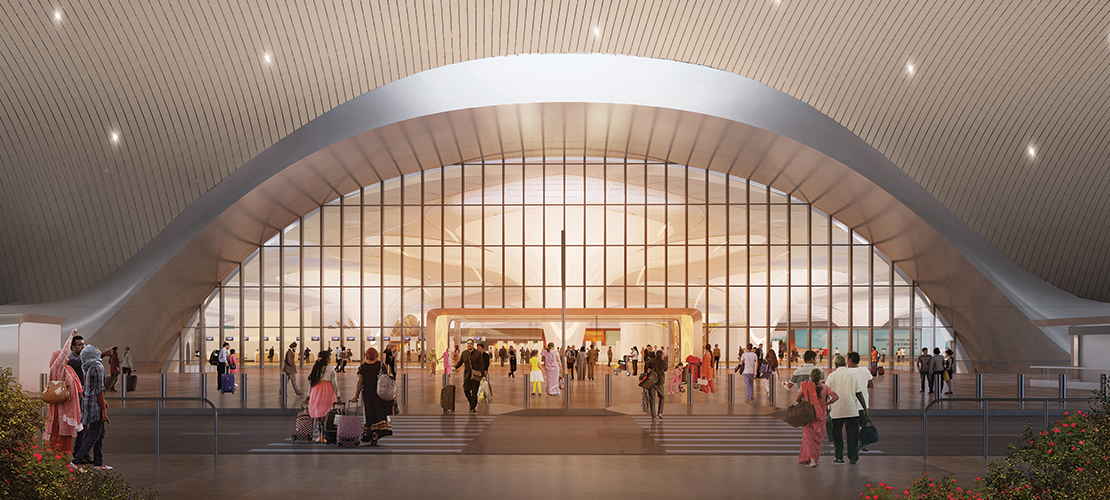
Navi Mumbai International Airport (NMIAL) represents one of India’s most complex and capital-intensive greenfield airport developments, executed under a public–private partnership model by Adani Airports Holdings Limited. The project has been delivered with a Phase 1 and 2 capital investment of ~₹20,000 crore, forming part of a larger multi-phase development plan. Commissioned in December 2025, the airport is designed with an initial capacity of ~20 million passengers per annum (MPPA), scalable to ~90 MPPA over subsequent phases.
On the first day of operations, NMIAL handled 48 flights across 9 destinations, serving over 4,000 passengers, reflecting strong operational-readiness and demand. The project also incorporates dedicated cargo infrastructure, multimodal connectivity, and provision for dual runways and multiple terminals, positioning it as a long-term aviation and logistics hub for the Mumbai Metropolitan Region.
The successful execution of NMIAL highlights AEL's strong project management capability in delivering large, complex infrastructure assets. The Company adopted an integrated approach spanning design, engineering, procurement, construction, financing, and stakeholder coordination, enabling effective management of challenges such as land acquisition, regulatory approvals, and multi-agency dependencies. Backed by disciplined capital deployment and execution at scale, AEL has demonstrated the ability to deliver projects within defined timelines while maintaining quality and operational readiness. NMIAL’s development as a digitally-enabled, future-ready airport with advanced automation and scalable infrastructure further reflects AEL's focus on innovation-led execution. This project reinforces the Company's position as a leading infrastructure developer capable of delivering nationally significant, high-complexity projects with precision, resilience, and long-term strategic vision.