Petrochemicals
Business Overview
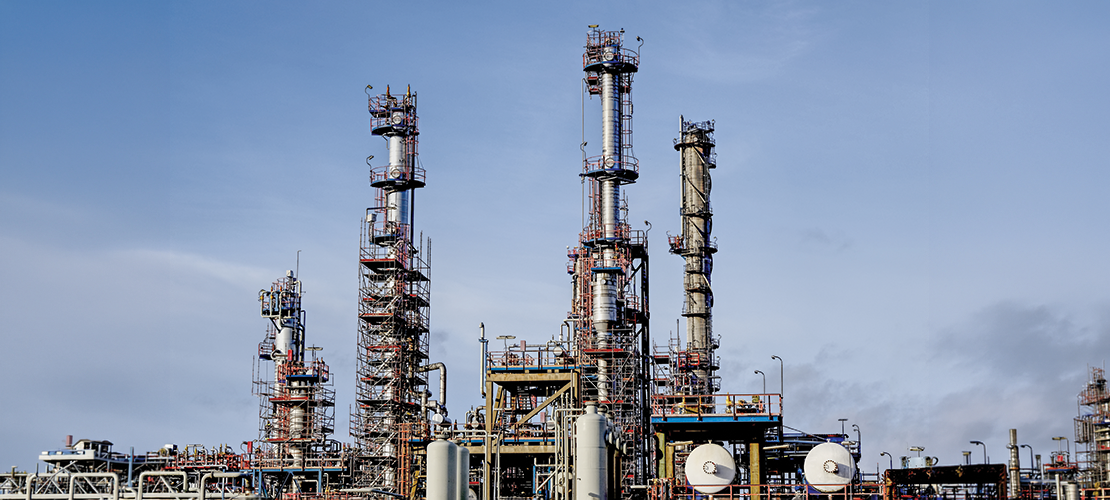
Mundra Petrochemicals Limited (MPL), a step down subsidiary of AEL, is currently under development phase of an integrated 1 MMT per annum PVC plant at Mundra, Gujarat.
Annual PVC demand in India during FY 2025-26 was ~4.55 MMT, while domestic production capacity stood at ~1.6 MMT, resulting in a supply-demand gap and imports of ~3 MMT. Even with MPL's planned PVC capacity additions, the shortfall is projected to remain significant, reaching ~3 MMT per annum by 2030. Agriculture, construction, and infrastructure sectors are the key demand drivers for PVC in India. The proposed project is expected to address the under-served market in India and reduce import dependency.

Global PVC market is growing at ~3-4% CAGR, while the Indian PVC market is expanding at 7-8% CAGR and has substantial import-substitution potential. India’s PVC demand is ~4.55 MMT per annum against a domestic capacity of only ~1.6 MMT per annum. MPL is developing a 1 MMT per annum PVC plant. We intend to pursue more such opportunities, aiming to develop an integrated petrochemical cluster and reduce India’s import dependency in line with the Aatmanirbhar Bharat campaign.
- Mr Jayant Parimal, CEO, MPLBusiness Edge
Policy Reforms
- The Make in India and Aatmanirbhar Bharat initiatives are focussed on promoting self-reliance and reducing dependency on imports, thereby encouraging domestic production and investment in the petrochemical sector.
- The government permitted 100% FDI in the petrochemicals sector through automatic investment route.
- The Gujarat Industrial Policy aims to boost industrial growth through supportive government policies, infrastructure development, ease of doing business reforms, incentives for MSMEs and startups, and a focus on sustainable practices and innovation.
- The government implemented a scheme to support the launch of need-based plastic parks with state-of-the-art infrastructure, facilitating common facilities through a cluster development approach. The government provides grant funding of up to 50% of the project cost, subject to a ceiling of ₹ 40 crore per project.
- The government’s project to set up a Centre of Excellence (COEs) is expected to help modernise the petrochemical industry.
- The government intends to provide incentives for innovation and inventions in petrochemical and downstream plastic processing industry segments under the Petrochemicals Research & Innovation Commendation Scheme.
Adani Group Advantages
- Proven expertise in commissioning and operating large-scale infrastructure and industrial projects (ports, power, and logistics)
- Large number of science and engineering graduates and skilled workforce
- Savings in logistics costs due to proximity to ports and demand clusters
- A culture of quality excellence that adheres to the highest benchmarks
- Adoption of innovative processes and investment in advanced technologies
Strengths of Our Business
- A ready to serve market both in India and internationally, with a large and rapidly growing Indian petrochemical sector
- Supportive government policies
- A well-trained talent pool and abundant availability of technical workforce
- Competitive talent costs
- Extensive availability of port-proximate SEZ, plug-and-play infrastructure
- Significant scope for product and process improvements
India’s Competitiveness
Feedstock Access
India's petrochemical industry relies heavily on imports, with over 65% of refining capacity tied to oil imports. Nearly 80% of the country's petrochemical production capacity is integrated with petroleum refineries, providing a strategic advantage in terms of access to raw materials.
Market Access
India exhibits a relatively low per capita consumption of chemicals compared to global averages. However, factors such as a large population, rising per capita income, and increasing demand across various end-use industries have positioned India as an appealing market for petrochemical products.
Capital Cost
India offers competitive manufacturing and production costs compared to other nations owing to economies of scale, low labour expenses, and advantageous logistics locations.
Operating Cost
The availability of skilled labour at competitive rates has been instrumental in managing the operating costs within India's petrochemical industry.